Last Week, Disney completed its high-profile deal with 21st
Century Fox after 15 months of intense meetings and negotiations. For the eye-watering
sum of $71.3 billion, it has acquired the 20th Century Fox film studio and its
offshoots (including Fox Searchlight and Fox 2000), the FX and National
Geographic Channels, and a controlling stake in the streaming service Hulu. Most
importantly, it now owns all of the movies and TV shows produced by the studio
over the years. These will be added to Disney’s forthcoming streaming service
Disney+, demonstrating their focus on providing a rival to Netflix and allowing
the company to be stronger and more successful than ever in an era of immense
change for the movie industry.
There are numerous reasons to be suspicious about Disney’s
big spending. In an age where we are becoming increasingly wary of the excessive
power enjoyed by big corporations, seeing one of the most powerful film
conglomerates in the world gain acquire even more properties can leave a rather
sour taste in the mouth. In the last two decades, Disney’s acquisition of
Luscasfilm and Marvel Films allowed them control over two of the most
successful movie franchises in the world, and the studio has assets worth almost $100 billion. The purchase of Fox adds an extra $30 billion, and ensures that
Disney’s share of the US cinematic market rises from 26% to around 36- 38% . In addition,
Disney’s reputation for being safe and bland has generated fears that they will
meddle in any film produced by Fox or Fox Searchlight, and rumours that Disney
heads Alan Horn and Bob Iger will have plenty of creative control are
understandably worrying in this context.
However, the move makes plenty of sense for Disney. For
instance, it allows them to enter the adult film market. Touchstone and Hollywood Pictures, which used
to be Disney’s divisions for distributing more adult films, both fell into dormancy during the 2000s and Disney can use 20th Century Fox to replace them and
produce blockbusters aimed at an older audience. In addition, its ownership of
Fox Searchlight allows Disney to compete in the Oscar race. The studio have
done this before (They owned Miramax for 17 years) but their control of Fox
Searchlight represents a way of gaining the critical legitimacy and respect
they have often lacked. Disney’s reliance on a handful of expensive big name
blockbusters has been incredibly limiting from a creative perspective, and the
numerous mid-budget and low-budget films from the Fox production arms can allow
Disney to diversify their output. Media coverage has focused on the fact that
Disney now have ownership of the Marvel heroes not owned by Marvel Studios (X
Men, Fantastic Four and Deadpool), The Simpsons and Avatar. However, it also
owns a wide range of movies which were produced and distributed by various
parts of the 20th Century Fox Company over the years. As a result,
these movies are now technically part of the Disney library. In around 84 years
of existence, Fox has been responsible for releasing over 4,000 films. Listed below are 15 Fox films which
are now owned by Disney and eligible for a place on Disney+ or Hulu. Some of
them fit the studio perfectly, whilst others are ludicrously inappropriate for
the House of Mouse…
Fairy Tales
Disney’s reliance on
fairy tale films, and their popularity and influence means that they have
defined the form during the last century. The acquisition of Fox strengthens
Disney’s claim to dominate the American fairy tale genre, as they now own three
of the most unique and creative fairy tale films to be released by Hollywood…

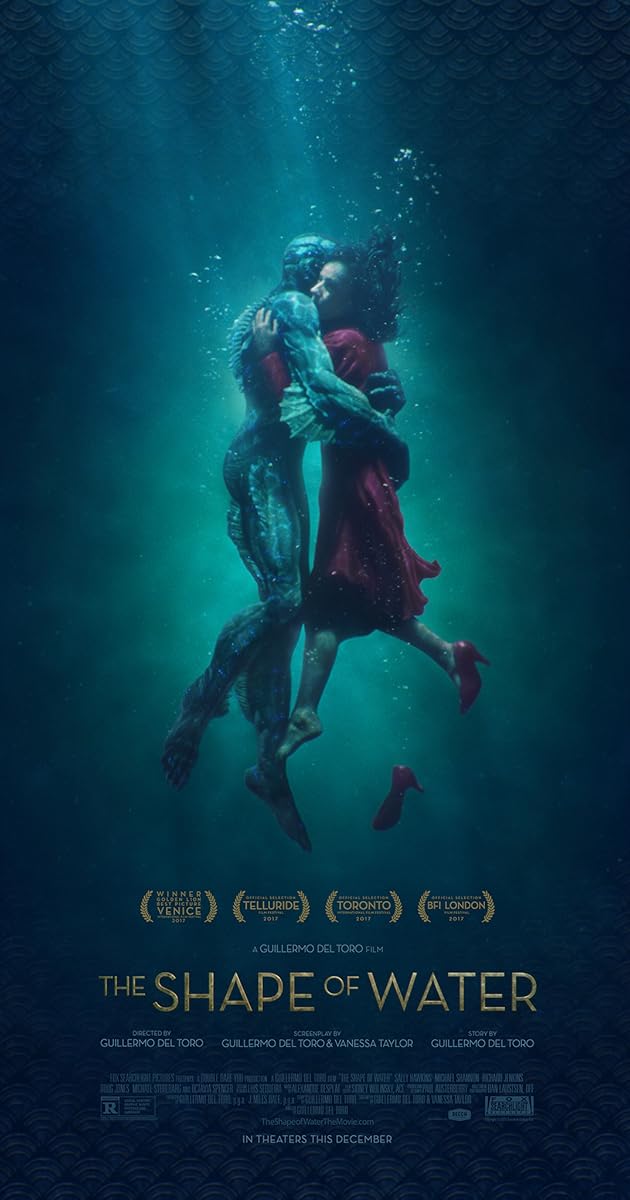
After the acclaimed Pans
Labyrinth and the cult favourite Crimson Peak, Guillermo Del Toro cemented his
status as “king of the adult fairy tale” with the Oscar-winning The Shape of
Water. Set at an unspecified time in the 1960s, it tells the story of a mute
cleaner who works night shifts in a mysterious scientific facility. When she
comes across a mysterious fish-like creature being imprisoned there, she begins
to form a connection with it, and soon breaks it out of the facility and hides
it in her apartment. Del Toro’s film possesses a wonderfully beguiling
atmosphere, with the dark blues and greens of the cinematography highlighting
the watery feel of the story and adding to the intrigue. Although the
protagonist Elisa and her water-dwelling new friend are unable to speak, they
are a compelling central couple, and the fairy tale feel of the story gives
their relationship additional power. In addition, The Shape of Water makes some
effective observations about the prejudice in America at this time. Elisa’s
friends include an African-American woman, a closeted gay neighbour and a
Russian double agent, whose outcast status plays a key role in their decision
to protect the creature. In contrast, the fanatical villain Strickland is the
epitome of the American Alpha male. Making progressive political points whilst
providing a uniquely escapist work, Del Toro effectively highlighted the power
of fairy tales to provide both a release from the world and a greater
understanding of it – The Shape of Water definitely deserved its Best Picture
win.
In many ways, The
Shape of Water is a typical Beauty and the Beast story, but its adult elements
are present immediately - Most fairy tale films don’t begin with the
protagonist pleasuring themselves in the bath. There are also some pretty
disturbing moments of violence, and that’s without mentioning the infamous
underwater sex scene. Despite this, The Shape of Water is certainly not an
example of cheap sensation, as the more controversial elements advancing the
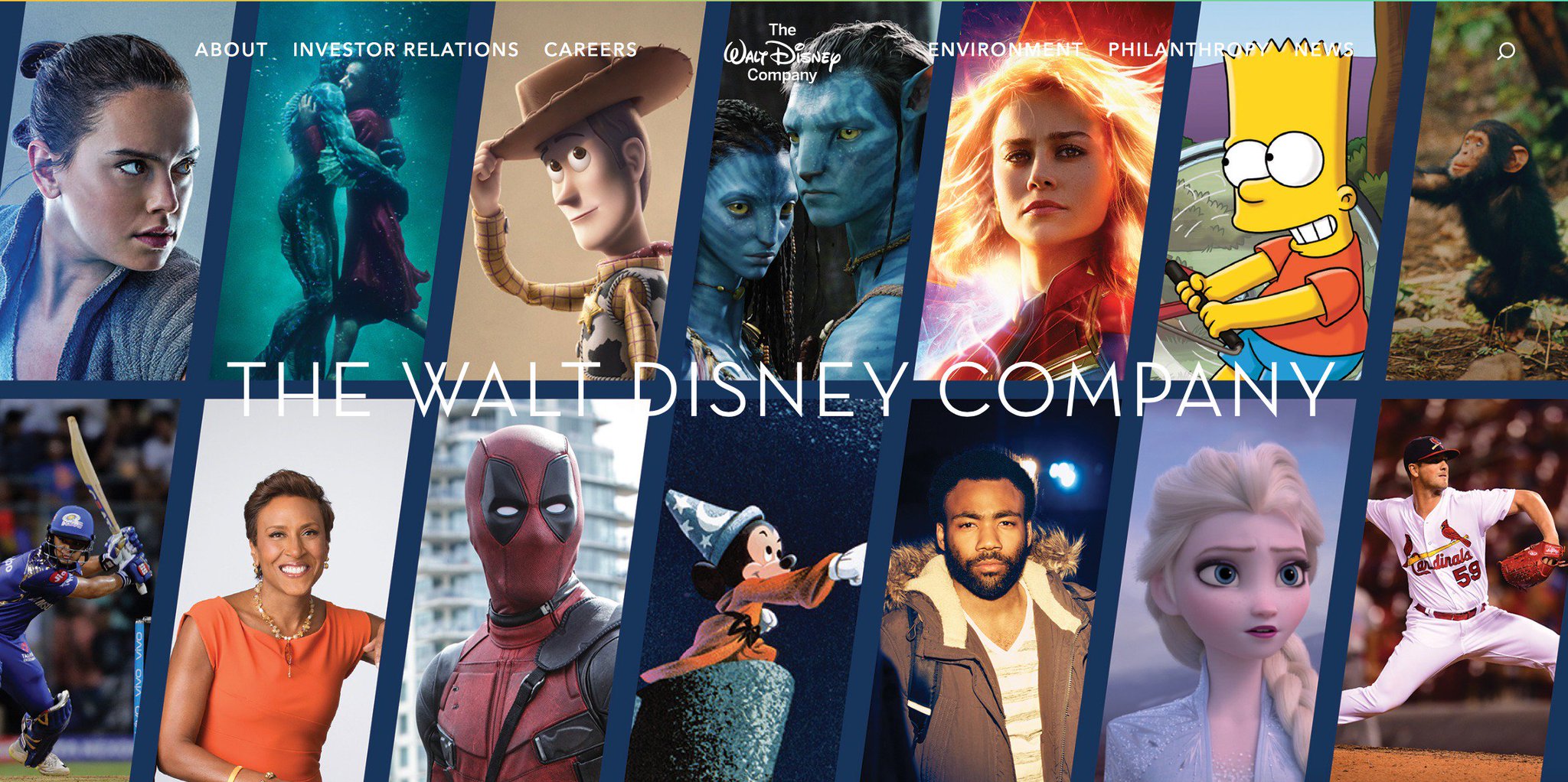
story and developing the characters. When Disney created a special banner to advertise their new acquisitions, they used the poster of this
movie to represent the Fox Searchlight production arm. This confirmed its
status as one of the most iconic fairy tale films of recent years, but also
demonstrates how far removed it is from the traditional Disney formula.

Before directing
Disney’s billion-dollar live-action remake of Alice in Wonderland (and their new
version of Dumbo) Tim Burton established himself as one of the quirkiest and
most interesting directors in Hollywood, with the 1990 film Edward Scissorhands
cementing his status as a major name. The premise is a variation on Pinocchio
and Frankenstein, as a mad scientist creates a an extremely lifelike robot from
scrap metal, but dies before he can provide it with a proper pair of hands,
leaving it with giant scissor blades instead. Edward is discovered by a saleswoman
and taken to her home in the suburbs, where his ability to cut hair and create
impressive ice sculptures wins the attention of the snobby locals. However, as
the dire side effects of having blades for hands become clear, Edward becomes
increasingly isolated by the community.
Burton’s followup to
his blockbuster adaptation of Batman, Edward Scissorhands is one of the purest
expressions of his iconic style. The clash between the gothic and mundane is on
show throughout, whilst Burton’s idol Vincent Price has a short but memorable
role as Edward’s creator. However, the film has a tragic dimension which most
of Burton’s work lacks, as Edward’s deadly hands prevent him expressing his
love for (played by Winona Ryder) and lead to him being cast out of his new
world. These two paragraphs alone contain more words than Edward speaks in the
entire movie, but Johnny Depp does an excellent job of using his unique body
language to bring the character to life. Another highlight is Danny Elfman’s
enthralling score, which perfectly captures the feel of a fairytale where most
of the action takes place around Christmas time. Edward Scissorhands has earned
its reputation as one of Burton’s finest films, and it is a worthy addition to
the Disney library.

With iconic
catchphrases such “Inconceivable!” “As You Wish.” And “My Name is Inigo Montoya. You Killed My
Father. Prepare to Die.” The Princess Bride has become one of the most quoted
fairy tale films of all time. It’s not hard to see why this movie is now a
genre classic. Written by the legendary screenwriter William Goldman and based off his own
novel, The Princess Bride tells the story of the relationship between Princess
Buttercup and her farmhand Westley. When Westley vanishes, Buttercup is forced
into an arranged marriage with the slimy Prince Humperdinck, but Westley soon
returns to win her back. The story is framed as a fairy tale being told by a
grandfather to his poorly grandson, and the grandson’s growing interest in what
he initially dismisses as a “kissing book” reflects the growing engagement of
the wider audience.
Except for the first
two Shrek movies, few non-Disney fairytales have enjoyed such an impact on
popular culture. Whilst Westley and Buttercup are likeable leads, the best
characters are in the supporting cast. Inigo Montoya and Fezzik are initially
hired by Humperdinck to kidnap Buttercup, but soon befriend Westley and join
his mission, proving to be invaluable allies. In addition, Wallace Shawn, Mel
Smith, Peter Cook, Peter Falk and Billy Crystal make memorable cameos – who can
forget the pompous and hot-tempered Vizzini, or the ancient and talkative
Miracle Max and his wife?. Disney have been trying to develop a stage
adaptation of The Princess Bride for several years, but the fact that they now own the original is
definitive proof of how far it has crossed into the mainstream.
Musicals
Whereas Disney are
kings of the animated musical, Fox are the studio most associated with their
live-action counterparts. Oklahoma, The King & I, Moulin Rouge, and The
Sound of Music are just some of the iconic musicals produced and distributed by
the studio, but the three below represent particularly interesting additions to
the Disney library…
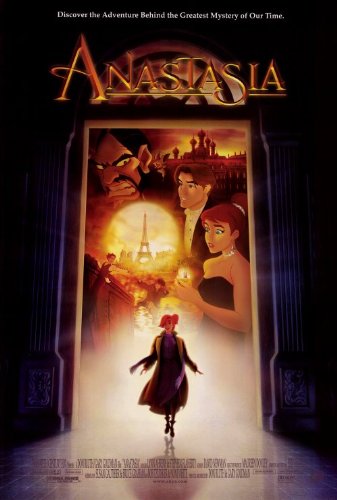
Disney have acquired
ownership of all of Fox’s animated properties, including The Simpsons and the
Ice Age franchise. They have also gained this 1997 hit, which once represented a
formidable challenger to the Magic Kingdom. This film was based on the premise
that Anastasia, the daughter of Tsar Nicholas II, survived the Russian
Revolution to end up in Paris with no memory of her past. In real life, she
died a horrible death along with the rest of her family, but no-one expects
historical accuracy from a film where Rasputin is portrayed as a demon sorcerer
responsible for the demise of the monarchy. Anastasia teams up with two conmen
to find the last remaining members of her family, but Rasputin is following in
a bid to finish off the Romanov dynasty once and for all…
Released as the
Disney Renaissance was slowing down, Anastasia had the feisty princesses, nasty
villain, colourful sidekicks and memorable music associated with Disney’s
recent hits but provided its own unique spin. Animation icon Don Bluth, who had been Disney’s
primary challenger in the 1980s (he directed the brilliant An American Tail and
The Secret of NIMH) directed and produced this film, providing a more detailed
and epic variation on his signature style. A modest hit in its
initial release, it appeared to signal Bluth’s return to form after several
years of mediocre and childish movies, but the failure of his followup Titan AE
and the wider demise of hand-drawn animation led to Bluth fading back into
obscurity. The movie has been immensely popular with millennials and was
eventually adapted into a stage musical, which eliminated the supernatural
elements from the story. It is just about to conclude a 2 year run on Broadway,
and has demonstrated that Anastasia has enjoyed the same enduring impact as
Disney’s animated hits. Its new status as part of the Disney library allows
fans to put Anastasia along with the other Disney princesses, but her movie
still remains a unique alternative to the antics of Ariel, Belle and
Pocahontas…

There are few
musicals like 1974’s The Rocky Horror Picture Show. A cinematic adaptation of Richard
O’ Brien’s underground stage musical The Rocky Horror Show, it follows the
classic B movie storyline of a couple getting lost and ending up in a sinister
castle, but with numerous changes to the formula for the era of sexual
revolution and liberation. Here, the stereotypically wholesome Brad and Janet
end up in a mysterious mansion populated by numerous odd characters, most
notably the cross dressing mad scientist Dr Frank N Furter and his blond
beefcake creation, the titular Rocky Horror. These eccentric inhabitants leave
Brad and Janet questioning the sexual certainties of their suburban world, and
in the words of the narrator, they will have “a night to remember for a very
long time”.
The Rocky Horror
Picture Show introduced the world to the reliably entertaining Tim Curry, who
is deliciously camp as Dr Furter, and featured early roles for Susan Sarandon
and Meat Loaf. The atmosphere is wonderfully over the top and ridiculous but
still faithful to the dark spirit of classic horror, whilst the songs blend
lurid and witty lyrics with catchy instrumentals. Unsurprisingly, this genre
and gender defying film was not a hit at first, but when New York cinemas began
to show it as a “midnight movie”, The Rocky Horror Picture Show became one of
the definitive cult classics, amassing a devoted fandom which endures today. Screenings
of the movie often utilise audience participation, including ringing bells and
throwing toilet paper in the air – it is certainly a long way from the
traditional sing-along showings. The Rocky Horror Picture Show has inspired
numerous outlandish and subversive musicals in the decades since, but the likes
of “Sweet Transvestite” remain as fresh and entertaining today as they were
when this film was first released.

The Greatest Showman is
one of the most unlikely hit films of the last decade. A passion project for X
Men icon Hugh Jackman, it is based on the life of the infamous circus
empresario P.T. Barnum, a tireless self-publicist whose ability at creating and
promoting sensationalistic entertainment made him a major figure in 19th
century America. The film depicts Barnum as a family man who establishes an
unusual circus show for “human oddities” that catapults him to fame. Historical
accuracy is discarded in favour of the Barnum myth, with an all-star cast
(including Michelle Williams and Zac Efron) and plenty of flashy cinematography
providing the sense that it is more focused on applying Barnum’s showmanship to
his life story rather than providing an actual examination of his work and
impact. Initial reviews of The Greatest
Showman were rather hostile, with many criticizing it for its attempts to
whitewash the story of Barnum and the inherently exploitative nature of the
“freak shows” which he pioneered. However, just as Barnum and his stars overcome
the snobby critics to win over the general public, the movie did the same in
real life. Over Christmas 2017, it became an unexpected sleeper smash. It
made $175 million in America (despite the fact it made less than $9 million in
its opening weekend) and earned over $400 million worldwide.
There is one major
reason for the success of The Greatest Showman - the incredible soundtrack.
Blending intense rock and even hip-hop inspired tunes, sombre power ballads and
upbeat inspirational anthems, it sounded nothing like the music of Barnum’s
day, and was all the better for it. The Greatest Showman soundtrack proved to
be that winning blend of modern and timeless, eventually becoming one of the
biggest selling compilations ever created. The likes of “This is Me” and “A
Million Dreams” have captured the imagination of girls all over the world in
the same way as “Let It Go” and “Do You Want To Build A Snowman” did five years
ago, and it is likely that they will remain staples of the musical genre for
decades to come.
Strong Women
Disney have spent the
last three decades creating a formidable line up of strong and relatable female
leads. The addition of the Fox library adds numerous female-centred films to
this lineup. These three films contain memorable and compelling female leads
who represent excellent sources of inspiration for Disney’s future heroines.

Disney’s recent hits
Tangled, Frozen and Moana all follow a similar pattern. They concern a feisty
yet naïve young woman who leaves her sheltered world behind to go on an
incredible adventure with a grizzled male hero. The heroine becomes stronger,
the male becomes kinder and there are plenty of meta jokes and references to
familiar adventure tropes. It is not hard to see why this formula works so
well, and it has played a huge role in Disney’s recent success. However, before
Disney entered their revival, this basic approach was successfully used by the 1984
adventure comedy Romancing the Stone. The film tells the story of Joan Wilder
(played by Kathleen Turner), who writes trashy romantic melodramas in her New
York apartment. When her sister is kidnapped in Colombia by crooks (one of whom
is played by Danny DeVito) seeking a precious diamond, Joan sets off to find her,
but gets lost in the South American jungle. In order to rescue her sister and
avoid an even more vicious villain also after the gem, Wilder must team up with
mercenary Jack T. Colton (played by Michael Douglas). Needless to say, life
soon begins to imitate art, and Wilder soon finds herself in the adventure that
can only end with her defeating the villains and finding true love…
Although Joan and Jack’s
adventures are a bit more violent and raunchy compared to those of Anna and
Kristoff or Rapunzel and Flynn Rider, it is pretty clear that Romancing the
Stone shares plenty of DNA with Disney’s hits from the last decade. It was somewhat
ahead of its time in being a jungle adventure film clearly centred on its
female protagonist, with Turner ditching her femme fatale image to play the ordinary
but unexpectedly brave heroine. She was aided by a lively script written by
waitress Diane Thomas, who famously pitched it to Douglas at a café. The movie
had a turbulent journey to the screen, with numerous stars turning down the
role of Jack T. Colton and several reshoots and rewrites taking place. However,
it was all worth it in the end -The film was a hit, Turner won a Golden Globe
for her performance as Wilder, and director Robert Zemeckis gained the
credibility needed to make his pet project Back to the Future. The sequel Jewel
of the Nile quickly followed but proved to be a critical and commercial
disappointment (it didn’t help that the film turned Joan into a more generic
love interest), although it did feature the wonderfully entertaining Billy
Ocean hit “When the Going Gets Tough” on its soundtrack. There have been
numerous attempts to revive Wilder and Colton for sequels and TV series, but
these have all fallen through. Hopefully, Disney will be able to bring the two
back into the spotlight.

The last queen of
Egypt, Cleopatra is one of history’s most famous and tragic female rulers. This
powerful and ambiguous leader is an odd inclusion to the line-up of Disney
princesses, but she now qualifies for this group due to Disney’s acquisition of
this 1963 epic. Iconic diva Elizabeth Taylor played the ill-fated Egyptian
monarch, with Richard Burton as her love interest Mark Anthony (Burton and
Taylor’s infamous on-off relationship begun during the making of this film) Rex
Harrison as Julius Caesar and Roddy McDowall as Anthony’s enemy Octavian. “Swords
and sandals” epics such as Cleopatra were to the 1950s and 1960s what superhero
movies and live—action remakes are to the modern cinematic landscape, and this
movie is a defining example of this grandiose old genre.
The making of Cleopatra
is even more fascinating and incredible than the film itself. Originally
intended to be two three hour movies, Cleopatra was edited into a single epic
over four hours long. Shooting was delayed numerous times, and a range of
illnesses and scandals forced the filming to be moved from Britain to Italy. Over
79 sets and 26,000 costumes were used, and the sheer scale of the production
led to shortages of building materials across Italy. Cleopatra was one of the
highest-grossing movies of the 1960s, yet was still considered a colossal flop
due to its exorbitant budget – The $44 million spent on making it is worth
around $250 million in today’s money. Cleopatra is a useful addition to the Disney
library - Its fate at the box office provides the newly inflated studio with a
stark warning of what happens if they allow hubris to take over and let their
blockbusters to get too big.

Among Disney’s
acquisitions is Fox 2000, which specializes in mid-budget productions often aimed at a teenage
audience. One of most recent and interesting movies from the studio is The Hate
U Give, based on Angie Green’s hit YA novel. The book follows Starr, an
African-American girl from a deprived Californian neighbourhood who goes to an
affluent and predominantly white school. When she witnesses a childhood friend
getting shot by a cop, Starr’s life is thrown into chaos, as she tries to work
up the courage to speak at the trial whilst coming to terms with the everyday racism
around her.
Played by Amandla
Stenberg, Starr is a compelling and relatable protagonist, and it is easy to
invest in her struggle to balance her black identity with the need to conform
to a “white” standard of behaviour at her high school. The hot topics of police
brutality, rioting, crime and racial prejudice are handled excellently. The
anger at the injustices and dangers which affect young African Americans is
clear throughout the story, but the film also includes flashes of hope and
humour which make the subject matter palatable. Although its box office earning
were unexceptional and it got no awards recognition, The Hate U Give is one of
the most interesting films in the YA genre, and is a must-watch for those who
want to see films of this kind directly tackle contemporary social issues. Sadly,
Fox 2000 is going to be closed down by Disney, but only after completing the films
which it has in the pipeline, including an adaptation of Thomas’ follow-up
novel On The Come Up and the recent YA phenomenon Children of Blood and Bone.
It would be great to see these get released, and hopefully Disney will allow
Fox 2000 to do them justice before they retire the studio.
Adults Only
There are numerous
films in the Fox Library that Disney would never contemplate producing or
distributing. However through the magic of corporate deals, these are now
technically Disney films. Whether ultra-gory revenge stories, satanic horrors
or tasteless comedies, these are as distant from the world of Micky Mouse and
Queen Elsa as it is possible for any film to be…
Titus
Titus

Theatre director
Julia Taymor became a household name with her innovative stage adaptation of
Disney’s classic The Lion King. Over two decades after it premiered, it is
still one of the highest-earning productions on Broadway, comfortably out-grossing Disney’s other stage musicals every single week. The success of The
Lion King gave Taymor the freedom to do anything she wanted, and she really
took advantage of it. Her first project
after The Lion King? A film where the signature scene features a character
unknowingly eating a pie containing the remains of her two sons…
Titus is an
adaptation of Shakespeare’s early play Titus Andronicus, an immensely violent
tale of revenge set in ancient Rome. Though incredibly popular in the 1590s, it
has been overshadowed by Shakespeare’s later, more nuanced tragedies such as
Hamlet and Macbeth. Anthony Hopkins is the intense and sinister Roman general
driven to madness by the death of his children, whilst Jessica Lange plays his
nemesis Tamora. However, the highlight of the film is Taymor’s production
design, which is full of detailed and impressive symbolism. Harsh colours were
used to convey the brutality of the story, and the look of the production
combined ancient Rome and modern Italy, with characters driving both cars and
chariots, and wearing both business suits and suits of armour. This epitomized both the universal dominance of war throughout the ages and the specific ideas
and values which the characters are associated with. Titus will remain an
acquired taste compared to other Shakespeare films, but it is an impressively
nasty showcase for Taymor’s creative vision, and a strong contrast with her
more family-friendly work.

Disney owe a lot of
their success and popularity to their focus on children, who are often ignored
as most film studios chase the fabled 18-35 demographic. However, the 1976 horror hit The Omen takes
the opposite approach, featuring one of the most infamous evil children in
cinema history. It follows Robert Thorn, an ambassador who secretly adopts a
baby after his son dies in the womb. But a series of suspicious incidents start
to happen and Robert begins to realize there is something odd about the new child.
The 666 etched on Damien’s scalp and the inability to find his birth mother
lead to a startling conclusion – Damien is the son of Satan himself, and Robert will
have to kill him in order to prevent him from becoming the Antichrist.
The Omen combines a
heavy religious atmosphere (including the eerie Oscar-nominated score) with
numerous grisly “accidents” that affect any priest or family member who begins
to get suspicious of Damien. The blend of sophisticated and gory meant that the
film was more downmarket than predecessors such as The Exorcist, but far
superior to the numerous cheap horrors which followed in its wake. The cast is
especially impressive for a movie of this genre, with the legendary Gregory
Peck playing Robert Thorn and the likes of David Warner, Billie Whitelaw and
Patrick Troughton also having key roles in the narrative. There was plenty of interest in satanic
goings-on during the 1970s, and production of The Omen was noted for several
misfortunes which allegedly affected the cast and crew of the movie, adding
further creepiness to its story-line. The Omen provide to be a box office hit
and generated a minor franchise, with three sequels and a remake (released on 6th
June 2006). Despite its status as one of the most notable horror movies of the
1970s, don’t expect Disney to bring Damien back in the near future…
Borat (AKA Borat: Cultural Learnings of America for Make Benefit Glorious Nation of Kazakhstan)

Fox have produced
numerous lowbrow comedy hits, including Dodgeball and There’s Something About
Mary, but none are as shocking and transgressive as Borat, a politically
incorrect comedy centred on the character created by British comedian Sacha
Baron Cohen for Da Ali G Show. Borat Sagdiev is a misogynist, anti-Semitic and
Anti-Ziganist (yet oddly lovable) reporter from Kazakhstan, who heads on a road
trip across America with his sidekick Azmat. In the USA, Borat encounters car
salesmen, college kids, humour experts and politicians, before his journey culminates
in an attempt to kidnap Pamela Anderson and make her his bride.
Needless to say,
Borat (which possesses the unwieldly and poorly translated full title Borat:
Cultral Learnings of America for Make Benefit Glorious Nation of Kazakhstan) is
not for the easily offended. Highlights include Borat’s overjoyed reaction after
hearing about the death of his wife, a sequence where a stay at a bed and
breakfast is ruined when Borat realises that the couple running it are Jewish,
and a scene where he and Azmat fight in public whilst totally naked. If you
prefer child-friendly types of comedy, then you will probably find Borat
totally unwatchable. However, there is method behind the madness, as Baron
Cohen improvised most of his scenes, interacting with people who had no idea
that Borat was a fictional character. Sometimes, their reactions to Borat’s
inappropriate behaviour can be amusing, but they can also be disturbing, as
they accept or even endorse his awful comments. The social satire can be
clever, but there is one thing which really makes Borat stand out - it is as
funny as hell. After Borat premiered in 2006, it became a bonafide cultural
phenomenon, with viewers dressing in Borat’s Mankini and repeating his “Is
Nice” catchphrase. Baron Cohen was never able to emulate its success, but Borat
secured his place in comedy history.
Male Stories
Blood, sweat and
testosterone are rarely present in the world of Disney, but Fox have made
numerous films aimed at male audiences which showcase the masculine imagery and
belief systems rarely seen in Princess films. Of the three works listed below,
one celebrates macho masculinity, one satirises it and one showcases the violent
world where it was necessary for survival. However, all three are far removed
from the prettiness and cleanliness one associates with Disney…
Fight Club

Fight Club

David Fincher is one
director who is definitely not likely of working with Disney in the future, as
his most popular films blend dark moody visuals and frequently sociopathic
characters with a pessimistic (and borderline nihilistic) view of the world. Having
previously worked with Fox on his ill-fated directorial debut Alien3, Fincher
returned to the studio for his 1999 film Fight Club, which became one of his
signature hits. It tells the story of an insomniac who attends emotional
support meetings for cancer patients in order to find a release from the
monotony of his life. He eventually comes across Tyler Durden, a mysterious
macho figure who possesses the confidence and charisma our unnamed protagonist
lacks. They two create the titular bare knuckle brawling club, and soon find
much more extreme ways of venting their frustration at the society surrounding
them…
Based on a novel by
Chuck Panihuk, Fight Club provides an excellent project for Fincher’s cold but
immersive directorial style, with Edward Norton playing the narrator, Helena
Bonham Carter as a fellow support-group voyeur and Brad Pitt ruthlessly
subverting his pretty-boy image as Durden. Critics were unsure whether the film
satirised or celebrated the unsavoury characters at the centre, and it
initially flopped at the box office. However, it soon gained a passionate
fanbase due to its memorable visuals, big ideas and intricate twists,
eventually becoming one of the Top 10 highest rated films on IMDB. Although it
was created to react to a specifically late 90’s state of malaise, Fight Club feels uncomfortably timely in an age of incels and political division (in fact,
“snowflake” – the disparaging term for those opposed to the offensive
worldviews of others - originated from the novel). With brutal violence, soap
bars made from human fat and scathing commentary on consumerism and capitalism,
it could not be any less appropriate for Disney, which is what makes it such a
perfect inclusion here.
The Revenant

The Revenant

18 years after he was
first nominated for Best Actor in Titanic, Leonardo Dicaprio finally won the
accolade for his role in The Revenant, a brutal drama set in the American West during
the 1820s. DiCaprio plays Hugh Glass, a frontiersman who gets badly wounded in
a bear attack. When the head of his hunting team abandons him for dead and
kills his son, Glass has to use every survival skill he knows to carry out his
revenge on the rest of the group. The
Revenant is based on a true story, but is considerably more violent, with a lot
more murder than Glass’s real-life odyssey. Through its focus on an
inhospitable winter landscape, The Revenant provides the brutality and moral
ambiguity associated with revisionist westerns, but its depiction of a man
trying to survive in a cold and harsh environment makes it a unique spin on the
subgenre.
Director Alexander
Gonzalez Inarritu and cinematographer Emmanuel
Lubezki were the duo behind 2014 Best Picture winner Birdman, and The Revenant represented
a gruesome and atmospheric follow up that allowed the two to further showcase
their skills. Almost all of the movie was shot with completely natural light,
and the numerous long takes highlight the brutality of the violence and the
desperation which fuels Glass throughout the movie. For the majority of the 156
minute film, he is alone on screen, willing to do anything to survive long
enough to carry out his mission, including cauterise his wounds with gunpowder,
eat raw meat and hide inside animal carcasses to keep warm. DiCaprio keeps us
invested in Glass during this harrowing journey, and his awards recognition was
richly deserved. Despite going considerably over budget, the film became a
pretty huge box office hit, making over $500 million worldwide.

Bulging biceps and
machine guns are the last things you would expect to see in a Disney movie. However,
Fox have produced several lurid action movies, including Arnold Schwarzenegger’s
1985 hit Commando, which embodies the mindless formula which was so dominant in
the mid-80’s. There is a story – Arnold plays a former colonel who has to
rescue his daughter from hoodlums trying to involve him in an assassination
plot – but it is little more than a pretext for all the ridiculous stunts and
slaughter, as the professional bodybuilder fights his way through a plane, a
shopping mall and a Caribbean island, shooting, punching and impaling any
villain foolish enough to stand in his way. Put bluntly, there is no nuance,
complexity or character development, but there is plenty of OTT action, and the
movie succeeds on its own ludicrous “shoot-em-up” terms.
Arnold was already a
star by this point due to the two Conan movies and The Terminator, but Commando
was the film which cemented the Arnold Schwarzenegger formula - Lots of guns,
lashings of violence and ludicrously terrible one liners. Over the next 2 decades, Schwarzenegger would
star in numerous films of this variety, ranging from the enjoyable to the
terrible. As a result, the image of the muscle-bound, superhuman action hero
went on to define the genre for much of the 1980s, and the likes of Chuck
Norris and Steven Segal tried to cash in on Arnold’s winning formula. However,
the “Austrian Oak” surpassed his rivals became one of the biggest names in
America. For all the flaws of Arnold and his films, their trashy appeal is
pretty obvious, and it is pretty amusing that Disney now has ownership of
Commando – it represents quite a counterpoint to the usual singing princesses
and cute animal sidekicks…