Search This Blog

Showing posts with label Major Issues. Show all posts

Tuesday, 19 June 2018

How Will John Lasseter’s Downfall Affect Disney?

In the past year, almost every walk of life has been affected by revelations of sexual misconduct and exploitation, with numerous prominent figures having been accused of a wide range of awful actions. One of the most devastating scandals to occur during this time has been the set of revelations about the sordid and sleazy behaviour of John Lasseter, the chief creative officer at Walt Disney Animation Studios (AKA Disney Animation) and Pixar. There is no underestimating Lasseter’s impact on animation (and American cinema as a whole) since he co-founded Pixar in 1984, becoming its chief creative officer. The studio have become one of the most acclaimed and successful creative forces in Hollywood, with eight of their films winning Best Animated Film at the Oscars and two (Up and Toy Story 3) even competing in the Best Film category. In 2006, Lasseter also become chief creative officer at Disney Animation and spearheaded the 'Disney Revival’ by producing films like Frozen and Moana. However, this glittering career has ended in total disgrace, as the damage caused by Lasseter’s misbehaviour and the outrage it generated meant that dismissing him was the only acceptable option.

John Lasseter’s downfall has significantly tarnished the Disney brand, and the company will need to change their internal culture without disrupting the constant stream of animated classics which have made them so powerful and influential. Earlier today, Disney announced Lasseter’s two replacements. Pete Docter, the director of Up and Inside Out, will become Pixar’s chief creative officer, whilst Jennifer Lee, the writer and co-director of Frozen, will take over at Disney. Both are under enormous pressure to continue providing hits whilst allowing their studios to move forward in new directions…

The Lasseter Scandal – A Brief Outline

During the autumn of 2017, the #MeToo campaign led to the exposure of predators and perverts who had occupied powerful positions in almost every major industry. Abuses of power at other animation studios had already came to light, so it was only a matter of time before Disney became implicated in a major sexual harassment scandal as well. Lasseter’s misconduct was revealed towards the end of November, after a memo he circulated to Disney Animation and Pixar employees was leaked to the press. In this document, Lasseter admitted to a range of ‘missteps’, including ‘unwanted hugs’, and announced he was taking a six-month sabbatical to reflect on his conduct. As soon as the statement was published, insiders quickly came forward with stories of Lasseter groping female staff members during meetings and parties. These were followed by revelations that he had committed further invasions of privacy, including forcibly kissing female subordinates and harassing models who worked for the Disney Fairies product line. In addition, Lasseter was revealed to be an alcoholic, drinking heavily during a variety of important events. He was also accused of mistreating critics and perceived rivals at Disney and Pixar, and even falsely taking credit for the ideas of others.

In retrospect, it was probably inevitable that Lasseter, who was widely known for his uninhibited personality (he was once filmed hugging 48 people in a single day) would frequently cross the line into inappropriate and offensive behaviour. However, the revelations were still devastating for Disney Animation and Pixar’s numerous fans, as the seemingly affable and enthusiastic face of these iconic studios was exposed as a lecherous bully. The revelations also reflected badly on Disney as a whole, as it was revealed that they had hired ‘minders’ to keep Lasseter in check during events but had not taken any real action to stop him. Furthermore, a ‘Day of Listening’ aimed at addressing discontent with Lasseter’s behaviour at Pixar had been held in 2011, but failed to generate any change.

During the six months after Lasseter announced his sabbatical, Disney kept discussion of the case to a minimum, possibly in the hope that the scandal would die down. However, it proved impossible to suppress the bad publicity affecting the company. In May, as concern grew that other wrongdoers exposed around the same time as Lasseter would return to their former power, an article from Wall Street Journal implied that Lasseter could regain his status as creative head, albeit with reduced managerial powers. This misguided proposal attracted considerable condemnation, and protests against Lasseter’s actions gained new potency. A #LoseLasseter hashtag was shared across social media, with numerous workers at Disney promoting petitions opposing his return. These probably convinced the heads of Disney that it was no longer possible for Lasseter to stay at the studio. Earlier this month, Disney announced that Lasseter would leave Disney Animation and Pixar for good on December 31st 2018, spending the period until then demoted to a consulting role. Bob Iger, president of the Walt Disney Company, issued a sanitised statement in which he praised Lasseter’s success at Pixar and Disney Animation, and expressed optimism about the future of the two studios. Lasseter also issued a statement where he claimed that the end of 2018 was the right time to leave and “begin focusing on new creative challenges”. In true Disney fashion, the upbeat statements concealed an unpleasant and seedy reality, but the unspoken implications were clear – the outrage at Lasseter’s misconduct had led to him going into an early retirement.

It goes without saying that there are numerous problems with the final settlement. Lasseter’s ‘Creative Consultant’ role is essentially the proposed ‘creative lead’ role used as a temporary, stop-gap measure. The six-month transition period is too long, and there is little clarity over how he will contribute to the company during this time (he will not even have an office at their studios). The highlights the fact that Disney’s response has been focused on trying to find compromises in a situation where this brand of diplomacy feels extremely inadequate. One explanation for this is Iger’s fear that a tougher response could cause Lasseter to become a major rival to Disney. This situation is not without precedent (Jeffrey Katzenberg, Disney’s Head of Production during their early 1990’s ‘Renaissance’, was fired in 1994 and responded by establishing the rival Dreamworks studio) but it feels insensitive to promote the prospect that Lasseter will find a way to remain a major power in the animation industry, given that so many people are disgusted by his conduct. Disney’s failure to deal quickly or decisively with Lasseter has made the company seem weak and uncaring in the face of the demands for change generated by #MeToo and the subsequent #TimesUp movement.  Nonetheless, the fact that he has finally been held to account for his awful behaviour is proof that the #MeToo movement can succeed in forcing seismic change.

Disney's Future.                           

Whilst Lasseter’s dismissal is a notable victory for the employees at Disney and the battle for a more diverse and progressive studio, there will be numerous questions over the extent to which a change in leadership will affect the quality of Disney Animation and Pixar’s output. The Incredibles 2 was the first Disney/Pixar film to still be in production when Lasseter went on leave, but the generally positive critical reception indicates that it has survived the behind-the-scenes turmoil. However, there are three more Disney/Pixar sequels deep in production. Wreck It Ralph 2 (AKA Ralph Breaks the Internet), Toy Story 4 and Frozen 2 are under extra pressure to succeed, as their critical and commercial reception will indicate how well Disney Animation and Pixar have adjusted to the changes caused by the scandal. Disney Animation have often struggled without a strong leader, with the death of Walt Disney and the firing of Jeffrey Katzenberg leading to long wilderness periods that left Disney’s animation wing in seriously poor health. If this situation repeats itself again, it could lead to serious questions about their long-term future.

This article has often conflated Disney Animation and Pixar due to Lasseter’s leading role at both studios, but they have very different creative environments, with different key figures. Although Lasseter has been in charge at Pixar for 34 years (compared to his 12 years as Disney Animation’s chief creative officer), they will probably be less affected by his departure, due to the more experienced ‘brain trust’ firmly established there. However, Disney Animation have a far younger and less experienced set of creatives, and this could easily be a major problem. The difference in experience at both studios is made clear when you look at the careers of their new creative chiefs. Pete Docter has been working with Pixar for almost 30 years, and as Vice President of Creativity at Pixar, effectively became Lasseter’s second-in-command there. With his reputation for writing and directing some of Pixar’s best films, and a collaborative leadership style which has made him popular in the animation community, Docter was probably the most obvious choice to take over at Pixar. In contrast, Jennifer Lee has only been part of Disney Animation’s writing team since 2011, and her inexperience has generated both advantages and disadvantages. Frozen became such a successful film because it took chances and subverted traditional Disney tropes in spectacular fashion whilst still providing colourful family-friendly entertainment full of catchy songs. A more experienced director would have provided a safer, more conventional film which would not have captured the imagination of the public in the same way. However, there were problems with Frozen’s story and characterisation, which were placed into sharp focus by the sheer inescapable popularity of the movie. Jennifer Lee is still at a relatively early stage in her career, and needs training and assistance in order to transition from a raw talent to a figure as acclaimed and respected as Pixar’s veteran directors (It is worth noting that Lee’s co-director on Frozen was Chris Buck, who has been with Disney Animation since 1978). Therefore, giving her such an important leadership role so quickly is a tremendous risk.

The presence of a new creative head will hopefully provide some benefits. During the 2010’s, Pixar have often been criticised for their over-reliance on sequels, with Cars 2 receiving a particularly hostile reception. Disney Animation have also been struggling to provide new and original movies, with Gigantic, a new take on Jack and the Beanstalk, getting cancelled in favour of sequels to Wreck It-Ralph and Frozen. There is also a risk that the winning formula used in most recent Disney Animation and Pixar hits is wearing thin. Most of the movies produced under Lasseter’s leadership at both studios have featured stories about an odd couple going on an incredible journey, large helpings of self-deprecating humour, and surprise villains whose true nature is only revealed near the end of the film (the idea of a seemingly friendly and likeable character turning out to be a horrible person feels a lot more uncomfortable in hindsight, for obvious reasons). Although their movies have still generally ranged from being very good to being excellent, there has definitely been some stagnation at both Disney Animation and Pixar in recent years, reminiscent of the overly prosaic approach which caused Disney Animation to fall from grace during the late 1990s. A new creative head could allow the studios to become more innovative and exciting whilst avoiding the failures which defined their previous eras of transition.

Practise What You Preach

Lasseter’s misdemeanours led to increased focus on the diversity issues which have affected Pixar in particular. The studio has been known as a ‘Boys Club’, with their movies excessively focusing on the journeys of male protagonists. Recently, Pixar have sought to move away from its excessively masculine image. Inside Out centred on two female leads, whilst Finding Dory and The Incredibles 2 both upgraded the most prominent female characters from the original movies into the primary protagonists. However, the greater levels of female representation in the films has not done much to change the problematic culture behind the scenes. In 2008, Brenda Chapman was hired to direct Brave, the first Pixar film with a female protagonist. However, she was dismissed from the project in 2011 and replaced with a male director. In a widely circulated article, Chapman complained about the way in which she had continually been ignored and dismissed by the Pixar elite. Unfortunately, the discontent generated by this episode did not result in major change. Rashida Jones and her husband Will McCormick were attached to write Toy Story 4, but withdrew from the project. After rumours that Jones had been harassed by Lasseter, she confirmed that her decision to quit the project was based on frustration with the fact that Pixar did not give women or minority writers an “equal creative voice”. This departure only confirmed the institutional inequalities at Disney and Pixar, and Lasseter’s disrespect towards his female employees is only the most extreme manifestation of this regressive culture.

(Note: Since Rashida Jones quit Toy Story 4, Pixar have made steps in the right direction, hiring Stephany Folsom to replace her on that project and appointing Dommee Shi– director of the acclaimed short Bao – to contribute to the story team set up following Lasseter’s departure. They still have a long way to go, but these changes are highly encouraging)

The need to provide a feminist environment is especially important for Disney Animation, due to their focus on female-orientated output. The films of the Disney Revival era, such The Princess and the Frog, Tangled, Frozen, Zootropolis and Moana, have ensured that Disney Animation’s female protagonists are more popular and important than ever. Characters like Tiana, Rapunzel, Anna, Elsa and Moana enjoy an appeal that goes far beyond the traditional ‘young girl’ demographic associated with Disney Princesses. Men and women of all ages have become increasingly open in expressing their love for Disney Animation’s recent movies, and the protagonists of these have become icons amongst those seeking to fight discrimination and exclusion. Therefore, Disney are under considerable pressure to set a positive example for this expanding audience. This is why the attempts to downplay or excuse Lasseter’s actions by comparing him to more extreme offenders are so misguided, as dismissing workplace harassment demonstrates a complete disrespect towards those affected by it (many of the women mistreated by Lasseter quit working for Disney as a result of his actions), and implies that they should remain subservient. Before they can provide positive, forward-thinking movies, Disney Animation need to provide a positive, forward-thinking workplace for their employees. Therefore, Jennifer Lee is the ideal choice to replace Lasseter. Animation is still dominated by males, so giving Jennifer Lee the opportunity to take over will allow them to lead the way in terms of female representation.

Conclusion

It goes without saying that John Lasseter’s misconduct, and Disney’s failure to deal with it properly, have done considerable damage to the studio and undermined its family-friendly reputation. However, now that he has finally left, we need to start looking to the future, and it is worth being highly optimistic about the evolution of Disney Animation and Pixar. The two studios have never just been about one man, and the numerous talented creatives there should be able to flourish in a more positive and stable environment, without the tension and animosity generated by Lasseter.  I am hopeful that Disney can go on providing appealing and inspirational animated films, and the new generation of writers and directors headed by Docter and Lee will be able to create a new range of animated classics which can be enjoyed for decades to come. 

Friday, 28 July 2017

Creating Fictional Worlds: How to Make Your Own Fairy Tale Kingdom

Given that the fairy tale genre is defined by characters and story, the significance of the setting can often be overlooked. However, the setting adds to the atmosphere of the stories, and gives characters an environment in which their adventures can take place. Authors of fairy tales can take two different approaches to the setting, often dependant on the medium of story (novels, films, TV series, etc.) in which they are working. Some prefer to use deliberately vague locations, primarily defined by their place in the distant past, whilst others try to depict their location in enough detail to make it feel like a genuinely realistic environment. The demands of audiences can have a significant impact upon the portrayal of fairy tale kingdoms. In recent years, authors have become increasingly aware of importance of representing foreign areas (particularly those outside the traditional European setting) properly without resorting to problematic Orientalist stereotypes, and the need to avoid simplistic clichés means that they have to portray their settings with more depth and complexity, genuinely examining their inner workings.

The Use of Non Specific Locations


In fairy tales, the main priority is telling an engaging story packed full of incidents. This means that the setting is merely described in the most basic fashion. Even fairy tales which aim to showcase a national culture take this simple approach, invoking images of a particular location without fully identifying it. When they published their collection of Children’s and Household Tales in 1812, the Brothers Grimm aimed to promote a unified German culture by highlighting the stories told by ordinary citizens in German-speaking lands, and emphasising the similar interests and values which linked these people. The “purely German” nature of the Brothers Grimm tales is made clear by the fact that these stories all take place in forests and castles similar to those which can be found throughout central Germany. However, the nationalist overtones of the Brothers Grimm’s collection are somewhat concealed by the fact that their location is almost never made explicit. Although some tales have a concrete setting (The Bremen Town Musicians is set on the road to Bremen, but the animal protagonists never actually reach the titular town) most are just set in unnamed and interchangeable kingdoms from “once upon a time”. This deliberately vague approach gives the stories a mysterious atmosphere, and enhances their sense of fantasy. Although the various storytellers whose works were collected by the Brothers Grimm based the locations of their stories on their home countries, they recognised that specifying a clear location would slow down their tales and make them too complicated, thus reducing their magic and universal appeal.

Early Disney films tried to capture the sense of mystery provided by the Brothers Grimm, with Snow White, Pinocchio, Cinderella and Sleeping Beauty giving us locations which invoke the look and feel of the source material without providing many specific details about them. This deliberately vague approach even applies to some of Disney's more modern films. For fans of The Little Mermaid, trying to place Prince Eric’s kingdom in a firm location is nearly impossible. Judging by the sunny climate, proximity to the sea, and the presence of birds such as Flamingos in the nearby area, Eric’s kingdom is seemingly inspired by Mediterranean areas such as Greece, Italy and Monaco. However, Eric’s castle is based on Chillon Castle in Switzerland, and the basic look of the nearest beach is closer to Scandinavian beaches than Mediterranean ones. Overall, it seems like writers and animators were primarily aiming to capture the look and feel of a generic sea-based Kingdom, with little regard for its internal geography. After The Little Mermaid, Disney films began using more clearly defined locations, whether real (Beauty and the Beast is set in France, The Princess and the Frog in New Orleans) or fictional (Rapunzel’s kingdom of Corona, Anna and Elsa’s Kingdom of Arendelle). The need to provide more sophisticated stories and more complex characters has led to the basic approach of earlier Disney films falling out of fashion, and they are now set within more realistic and detailed environments.

Creating Worlds both Near and Far


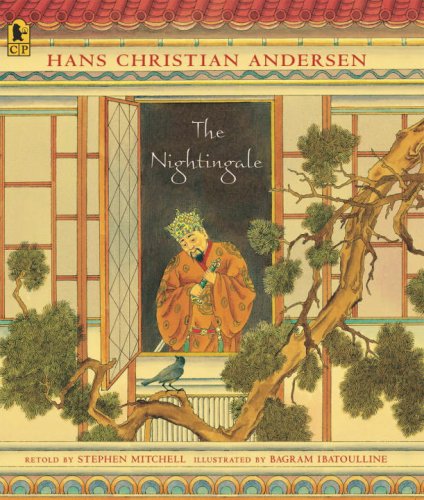
The magic and mystery represented by these faraway lands have often inspired fairy tale authors. A number of Hans Christian Andersen stories are set in exotic locations, most notably The Nightingale, which takes place in ancient China. During the 18th Century, translations of Arabian Nights became popular in Europe, and in 1805 (The year of Andersen’s birth) the Danish poet and playwright Adam Oehlenschlager created a stage version of Aladdin. This was highly popular in Denmark and Oehlenschlager’s romanticism inspired a lot of Andersen’s finest work. Andersen’s fascination with Asia often bled into his tales in more subtle ways. Though his version of The Little Mermaid is regarded as one of the definitive Danish fairy tales, it is actually set in a kingdom with palm trees and orange trees on the beaches, buildings made from white and yellow materials and characters wearing silk and gold. These descriptions invoke images of the Mediterranean, in particular Asian areas such as Turkey, rather than the less colourful environment of Scandinavia. Incorporating the bright colours and distinctive architecture of the Middle East and Far East into his works allowed Andersen to show off his ability at creating beautiful and evocative descriptions and gave his work the magical atmosphere which has allowed it to remain so iconic today.

Many fairy tale works find inspiration closer to home. In Shrek 2, the fairy tale kingdom of Far Far Away is heavily based on modern-day Los Angeles, complete with a version of the Hollywood sign, red carpet events, shops such as Abercrombie and Witch, and even TV shows. The casually anachronistic nature of Far Far Away generates comedy which keeps with the modern and irreverent tone of the Shrek series. However, the decision to model this a fantasy environment on such a prominent real-life location also serves a more serious purpose. LA is famous for being one of the most glamourous cities in the world, due to its association with the stars of Hollywood. By using this location as their inspiration, the makers of Shrek 2 manage to draw parallels between the aspirational fantasies represented by life in LA and the fantasies which define fairy tales, suggesting that the rich and famous of today are the modern equivalent of the kings, princesses and other major fairy tale characters. This gives them the opportunity to create a clearly-defined and colourful world for our characters to inhabit, whilst also satirising the quirks of life which define not just LA, but in the whole of America. The combination of the magical and mundane allowed Shrek 2 to appeal to both children and adults, generating plenty of comedy about modern life without losing the creativity and imagination which make fairy tales so timeless.

The Problems with Creating Distant Kingdoms


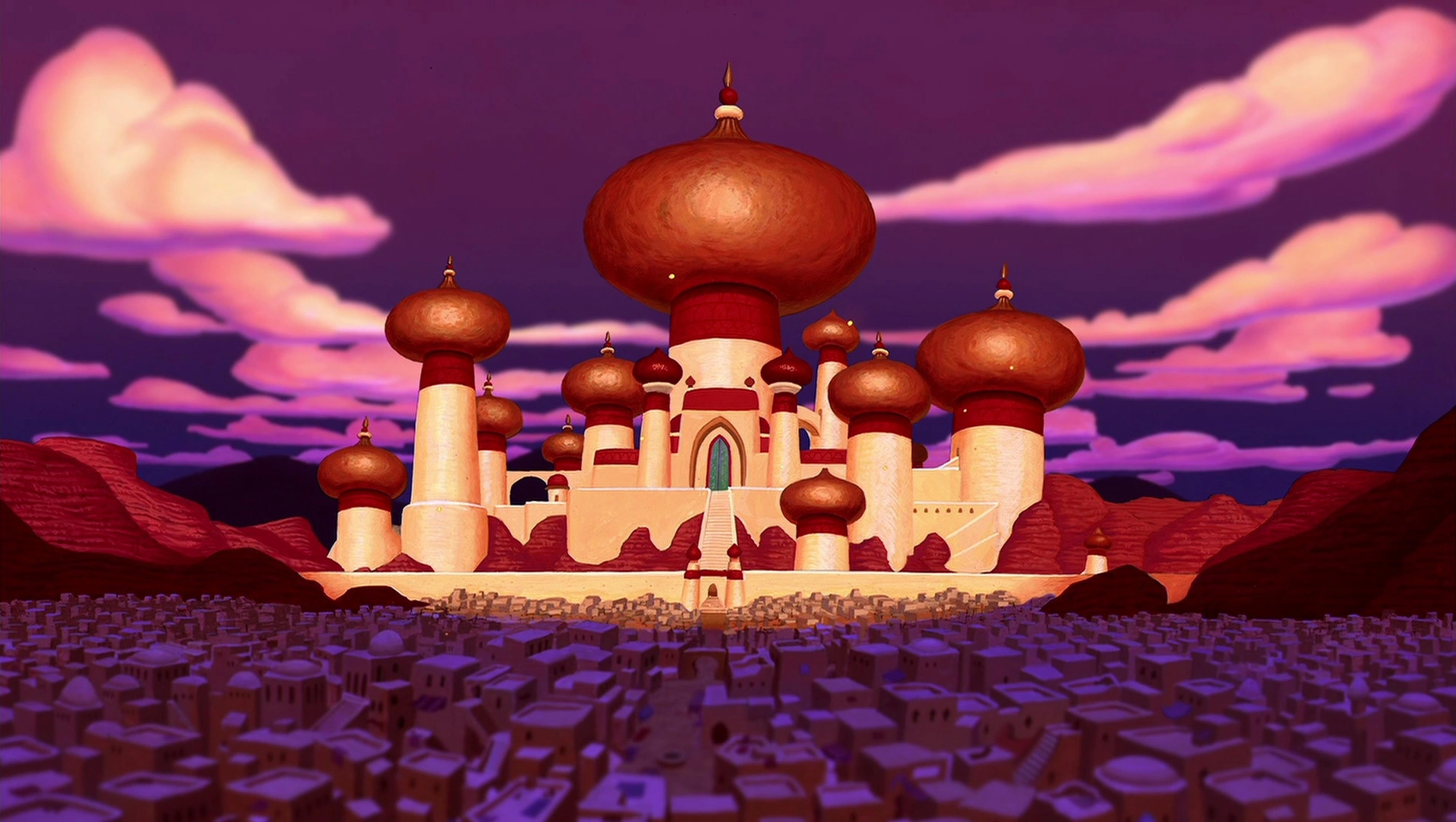
Sometimes, there are instances where decision to set a story in a fictitious kingdom can lead to controversy. This can often happen when creating locations based on regions which are often underrepresented or depicted in an overly stereotypical fashion by Western filmmakers. One film which been particularly criticised for the way in which it creates a fictitious kingdom is Disney’s 1992 hit Aladdin. The kingdom of Agrabah, where Aladdin and the other characters live, is based in the Middle East, but there are also a number of elements from Indian culture, with the Sultan’s palace being modelled on the Taj Mahal. This casual blending of a diverse range of complex cultures into a single entity is made even more problematic by the shallow portrayal of Agrabah’s citizens. With the exception of Aladdin, Jasmine and possibly the Sultan (who look and act more like Westerners than the rest of the cast), the human characters in Aladdin are almost all grotesque caricatures. The Westernised view of Eastern cultures as a single, stereotyped, backwards ‘other’ is known as ‘Orientalism’, and this has the toxic effect of increasing prejudice against these areas. Combining elements from Eastern cultures indiscriminately without respecting their differences and complexities reinforces the Orientalist worldview. It can also generate the deeply offensive implication that the most distinctive thing about these areas is the fact that the inhabitants are not white. In the case of Aladdin, the mishandled and lazy combination of Arabian and Indian cultures ensure that neither is represented properly, hence the controversy generated by the decision to cast the Anglo-Indian actress Naomi Scott as Princess Jasmine in the forthcoming live-action remake of the movie.

Ron Clements and John Musker, the co-directors of Aladdin, also co-directed Disney’s more recent hit Moana. It’s depiction of Polynesian characters and customs is far more sensitive, and more scrupulously researched, than Aladdin’s depiction of Arabs, but there are still issues with it. One of these is the way in which Moana’s island, Motonui, features elements from various Polynesian cultures, including Samoa, New Zealand, Fiji and Hawaii. As a result of this, a small but vocal band of critics have accused it of perpetuating Orientalist tropes by reducing many complex cultures into a single fantasy world. However, in the case of Moana, the decision to amalgamate a diverse range of customs and cultures is more justified for two reasons. First of all, the film is inspired by the story of the Long Pause – the 2000 year gap between the arrival of settlers in Western Polynesian Islands like Fiji and Samoa and the colonization of islands in Central and Eastern Polynesia. During the second wave of exploration, Polynesian tribes discovered, and eventually came to inhabit, islands such as Hawaii and New Zealand. Hawaii and New Zealand are the two areas in the region which have the largest population, and most of the key figures involved in making the movie (including almost all of the cast, as well as co-writers Taika Waititi and Aaron and Jordan Kandell) come from Hawaii and New Zealand. For these people, the wayfinders who ended the Long Pause are a common set of ancestors, so it makes sense for Moana and the people of Motonui, who represent a fictionalised version of these wayfinders, to originate some of the traditions which would later become synonymous with their descendants. Secondly, Moana is based on a set of myths which vary between the Polynesian islands. Just as the writers had to merge several different stories about Maui into a single narrative, they had to merge numerous different and sometimes contradictory customs and beliefs, trying to represent all the regions of Polynesia instead of one specific area. Overall, the Polynesian culture which is created for the film is much more respectful than that of Aladdin, but there are still plenty of errors and missteps, and the very idea of creating a fantasy kingdom based on an area which is often overlooked and misrepresented in the real world can be problematic for some.  The pressures faced when making both Aladdin and Moana illustrate the fact that creating a fantasy world for fairy tales can be a risky process which needs to be handled carefully in order to avoid problematic implications.

Exploring the Kingdom


In the world of fairy tales, life as a ruler is often depicted in an overly idealised fashion. Male heroes are rewarded for their bravery by winning the hand of a beautiful princess in marriage, and the fantasy of being a princess remains popular amongst girls today. The portrayal of medieval kingdoms as worlds where characters enjoy power and prestige, as well as pretty castles and elegant clothes, can clash with our knowledge that the pre-enlightenment period in which most fairy tales are set was one defined by prejudice, plague and superstition. This contrast between the dream and the far less glamorous reality has inspired works such as Amy Schumer’s Princess Amy sketch, Rachel Bloom’s Historically Accurate Disney Princess Song, and David Henry Wilson’s 1989 novel The Coachman Rat, which aim to show that the optimistic fantasies of fairy tales cannot survive in the cruel historical world in which they are set. These works have a number of differences (Schumer and Bloom use their signature styles of edgy comedy to make their points, whilst Wilson’s novel is crushingly bleak) but they share a focus on deconstructing the belief that becoming a member of the royal family in a fairy tale world is a dream come true. In recent years, people have become increasingly aware of the violence and tension underpinning daily life, and this has fuelled the demand for darker and edgier stories. The comforting picture of becoming a popular and successful monarch leading a happy medieval kingdom has become less credible, and this has encouraged some particularly brutal fictional subversions of it.

However, showing more of the real world surrounding the fairy tale protagonists does not necessarily mean focusing on the most negative aspects of the human experience. Some of Disney’s most successful properties, such as Aladdin, The Little Mermaid and Tangled, have been spun off into animated TV series, and the increased amount of time spent with the protagonists in this new medium means we need to explore their world in more detail. In films, the kingdoms of our protagonists are depicted in a superficial fashion, as they tend to be a mere backdrop for events, but TV series need to give us a greater understanding of the environment which our protagonists inhabit. The rise of fanfiction has also fuelled increased interest in exploring the inner workings of fairy tale worlds. Frozen has lended itself particularly well to fanfics about royal affairs. Elsa is the first Disney protagonist to be shown becoming a queen, but her responsibilities are barely explored in the film itself. In a family-friendly fantasy musical such as Frozen, examinations of the political intricacies of Arendelle would be an unnecessary and tedious distraction, but in the world of fanfic, authors can discuss the pressures of running a kingdom as much as they wish. Going beyond the basic depiction of a fairy tale kingdom is hard to do in films, but longer and more complex forms of entertainment recognise that building a more developed and realistic world allows increased opportunities for our protagonists to go on adventures.

Conclusion

In the fairy tale genre, memorable characters and an engaging story are generally more important than the setting, which tends to be a mere backdrop. However, a memorable setting can enhance a fairy tale by giving it a distinctive atmosphere, or providing a variety of interesting places where the protagonists and antagonists can interact. The amount of detail which should go into depicting a location depends on the amount of the length of the story and its focus. In a three-page, fast-paced Brothers Grimm story, the settings do not need to be described in any great detail, but in a film like Moana, we want to get a sense of the daily lives of our characters and the world they live in. In recent years, writers and filmmakers have tried to satisfy the demand for settings which reflect the diversity and complexity of the modern world, sometimes creating controversy in the process. Ultimately, a distinctive location can make a fairy tale film stand out, but we should not forget that it also needs to provide a story and characters which audiences all over the world can enjoy and relate to.

Friday, 19 May 2017

Fairy Tales and Capital Punishment

Previous posts on this blog have discussed how fairy tales relate to controversial subject matter such as nationalism, politics and racism. However, out of all the issues associated with fairy tales, one of the most problematic is their use of capital punishment. Many fairy tales are notable for ending with the villains getting executed in particularly lurid and gruesome fashion. Fairy tales appeal to us because of their ability at providing wish-fulfilment, and there are few things more satisfying than seeing a villain punished for their misdeeds (something which doesn’t happen as much as we’d like in real life). However, the use of the death penalty to deal with them raises a number of issues.

To start with, we need to establish a distinction between capital punishment and other means of killing off a villain. For example, Disney films often end with the villain suffering an impressively disturbing death, providing a welcome dose of darkness in otherwise light-hearted movies. However, Disney villain deaths are often accidental, with baddies such as Gaston, Frollo and Clayton falling to their deaths as a result of their own hubris. In the Disney films where the hero or heroine actively kills the villain (e.g Sleeping Beauty, The Little Mermaid and Mulan), it is done during a battle, either out of self-defence or the need to protect others. There is a world of difference between a death which occurs by accident or in battle, as unpleasant as it may be, and executions which are designed to be as degrading, terrifying and protracted as possible. Thus, even those who enjoy seeing the Wicked Queen from Disney’s version of Snow White and the Seven Dwarves fall to her death can find it uncomfortable when the Brothers Grimm version ends with the Wicked Queen being forced to dance herself to death in red-hot shoes. The nearest thing to a villain being executed in a Disney film is when Scar’s hyenas turn on him at the end of The Lion King, and that is the result of his henchmen acting in their own self-interest. In contrast, fairy tale executions are the result of a normally benign ruler (who usually tends to be the husband or father-in-law of the protagonist) adopting the role of nemesis and inflicting an incredibly unpleasant punishment in the name of justice.

However, there are techniques which make the use of capital punishment in fairy tales seem more tolerable. The main way of doing this is by reducing the characters to archetypes. Just as the heroes are purely good, the villains are purely evil. The lack of depth and internal psychology makes it much easier to hate the villains, as they are defined solely by negative traits and actions, increasing opposition to them enough to make execution seem like an appropriate punishment. In fairy tales, capital punishment seems to be presented as a relatively reliable instrument of justice. Although heroic characters may be threatened with the death penalty (as in The Six Swans) they are invariably rescued before anything bad can happen to them. One major issue with capital punishment is the fact that many innocent people get executed for crimes they didn't commit, but as this doesn’t happen in fairy tales, it seems a lot less unjust. In addition, the gruesome deaths which occur are described in a very superficial way. We just hear that they happen – the details are omitted, as the blood, gore and pain which makes these fates so unpleasant is not mentioned in any way. This creates distance between the action and the audience, ensuring that there is less awareness of the reality of capital punishment and putting it within the fantastical context of the fairy tale environment.

A key way of creating distance from the villain and justifying the use of capital punishment is through a frequently used trope called the ‘Original Position Fallacy’, in which a character makes an unwise proposal based on the mistaken assumption that they will not suffer the consequences of it. This plot device is often found in the subgenre of ‘False Bride’ fairytales (of which The Goose Girl is the most notable), in which a villainous stepmother or maidservant steals the protagonist’s throne. These stories end with the heroic king discussing the plight of the heroine and asking the villain what punishment should befall the person responsible for this. Said villain doesn’t realise that the ruler is referring to their misdeeds and, out of sadism or a desire to protect their secrets, suggests a particularly nasty form of execution for the criminal, most often involving being stuffed into a barrel lined on the inside with spikes and dragged through the streets by horses until they bleed to death. It is then revealed that they have “spoken their own sentence”, and the punishment is carried out on them instantly. With the ‘Original Position Fallacy’, the villain literally brings their fate upon themselves. This makes their suffering into a direct punishment for their overconfidence, reducing its disturbing impact.

Another reason for retaining the use of capital punishment in fairy tales is the need to reflect the fact that they tend to be set in a much harsher era. Fairytales typically take place in an unspecified version of the past which exists between the medieval era and the dawn of the industrial revolution. During this time, maidservants would be harshly punished for their infractions. In Germany, even petty misdemeanours from maidservants were treated as major crimes, with lazy or dishonest servants being forced to stand in the pillory and being banished from the town. Meanwhile the ‘Bloody Code’ in Britain meant that many maids were hanged for mere theft. In this context, the crimes which the villainous maidservant commits in The Goose Girl (Refusing to fetch water for the princess she is meant to be looking after, stealing her throne, forcing her to work as a servant tending geese and killing her horse) are definitely worthy of more extreme penalties. The period was also defined by a belief in the “divine right” of the absolute monarch, as kings, queens, princes and princesses were believed to receive their power from god. This meant that attempts to subvert this hierarchy posed a major threat to order and stability. In fairy tales, this danger is often embodied by devious maidservants and wicked stepmothers trying to assassinate or overthrow the protagonists, and a harsh response to them reinforces the message that mistreatment of royalty can have dire consequences. The society of the past was much more brutal and barbaric than the more permissive world we live in today, and the use of capital punishment in fairy tales reflects this reality whilst expressing it in a fairer way, with only villains truly suffering.

The decision to cut capital punishment out of fairy tales is often dismissed as an attempt to sanitise them. However, there are reasons of getting rid of it which go beyond a desire to avoid traumatising children. One reason is the need to adopt a more realistic approach, which avoids the moral certainties needed for the death penalty to be acceptable. This is made clear by comparing the Brothers Grimm story The Six Swans with Hans Christian Andersen’s version of the tale, The Wild Swans. Both feature a protagonist who is accused of witchcraft, but gets rescued by her brothers at the last minute. In The Six Swans, the heroine is deliberately framed for witchcraft by a wicked stepmother who kidnaps her children. The story ends with the crimes of the stepmother being exposed, and she gets burnt at the stake instead of the protagonist. However, in The Wild Swans, the character who accuses Princess Eliza of witchcraft is an overzealous archbishop, who is portrayed as misguided rather than evil and does not receive any punishment for his actions. The Wild Swans simply ends with Eliza’s innocence and purity being recognised, disproving the archbishop’s allegations about her. This difference in approach indicates a more sophisticated attitude towards morality. In real life, you are more likely of finding an antagonist like the archbishop, who acts based on mistaken assumptions and prejudices as opposed to pure malice. In this situation, the best way of dealing with them is simply to demonstrate that they were wrong. Even when using more straightforward villains, modern fairy tales have often sought different ways of giving the villains their comeuppance without killing them. In recent Disney hits such as Frozen and Moana, villainous characters have been humiliated instead of killed. Villains have been less important to recent Disney films, as the studio has focused increasingly on providing more complex and developed protagonists, so they don’t really need a spectacular defeat. Furthermore, the outright villains in these movies, such as Hans and Tamatoa, are focused on upholding their personal image (Hans with his “Prince Charming” façade, Tamatoa with his boasts about how shiny he is), meaning that the most satisfying way of dealing with them is to discredit them. Sometimes, there are better ways of dealing with a villain than simply killing them, and undermining their beliefs or image can be a stronger punishment.

The reduced focus on villains has coincided with an increased emphasis on heroes and heroines. Instead of being mere visions of beauty and power, they have to be strong, realistic characters and positive role models. This means that, for those who read old fairy tales, it can be uncomfortable to see the kind, beautiful heroes and heroines reacting to extreme methods of execution by standing back and doing nothing. In fact, in one horrifically racist ‘False Bride’ story from Portugal, The Maid and the Negress, the heroine herself is the one who suggests that the villain should be killed, with her bones made into bed-steps and her skin used for a drum. Even when her suffering is taken into account, this is unnecessarily sadistic, making the supposedly virtuous princess into a much less appealing character. More recent stories have often featured different responses to villainy, giving the protagonist greater depth in the process. In several adaptations of The Goose Girl, including the 2009 version for the popular German fairytale series Sechs Auf Einen Streich (Six in One Stroke), the heroine intervenes at the very last minute, choosing to spare the wicked maidservant from her gruesome demise and have her exiled instead. These versions of the story often make it clear that the maidservant’s actions are motivated by her frustrations with her job, and her dissatisfaction with life as a servant (This is seldom discussed in the original fairy tale, where she seems to be acting out of mere spite). Thus, the heroine’s willingness to show mercy indicates that, unlike her enemy, she is not going to let her experiences of forced servitude make her bitter and resentful. The need for protagonists to set positive examples for the audience means that they need to be merciful and compassionate as well as brave and beautiful, and refusing to use capital punishment is an excellent example of this more enlightened approach.

Conclusion

Like many issues, the decision of how to punish the villains in a fairy tale is a matter for the storyteller. If you have to kill off a villain, accidental deaths or deaths in battle are probably preferable. They tend to be integrated into the story more effectively (the execution of a villain tends to occur at the very end of the story, after their defeat) and offer the most satisfying aspects of capital punishment, such as ensuring that the villain can’t hurt anyone again, without the numerous problematic features. That said, the gruesome creativity of execution scenes in fairy tales tends to make them highly memorable, and many readers enjoy these moments. This doesn’t necessarily mean that they should be kept, as the means of punishing a villain should depend on their personality and behaviour. Whilst some tales have antagonists who are annoying rather than evil and not worth punishing in such an excessive fashion, others feature villains so despicable that even the most gruesome execution is not nasty enough for them. Ultimately, the approach taken towards capital punishment should vary according to the type of story. In a more moralistic tale which adheres to the primal sensibilities of Brothers Grimm, executing the villain in gruesome fashion can be an effective way of appealing to our desire for revenge. However, in a fairy tale which places more emphasis on providing complex and interesting characters, the use of capital punishment is often unnecessary and inappropriate, and should generally be avoided.