Search This Blog

Tuesday, 28 November 2017

25 Plays, Ballets and Pantomimes To See This Christmas (Part One)

As families search for entertainment during the cold, dark winter nights, theatres seek to attract them with adaptations of classic family-friendly stories. Retellings of familiar stories can provide colourful, engaging escapism for viewers of all ages, so theatres compete to provide the most entertaining adaptations of old favourites for the stage, gaining particularly large audiences during the Christmas holidays. There are numerous interesting pieces of fairy tale theatre available this Christmas, so this list will be split into two parts. This part will focus on plays and musicals based on fairy tales and classic children's novels. Part Two, which will be published in a few days time, will focus on ballets and pantomimes...

Plays in London


London's numerous theatres are incredibly busy during Christmas, as tourists and families flock to see a wide variety of plays in the city. In addition to long-running West End favourites like Wicked, Aladdin and The Lion King, there will be a number of new family-friendly plays for audiences to enjoy this Christmas...

A Christmas Carol

Where: The Old Vic, London

When: Until 20th January

If there is one story which is synonymous with Christmas, it is A Christmas Carol, the 1843 Charles Dickens classic about the miser Ebeneezer Scrooge and the ghosts who visit him on Christmas Eve in order to make him change his ways. A Christmas Carol has been adapted for stage and screen numerous times, with Scrooge played by iconic actors such as Alister Sim, Michael Caine and Jim Broadbent. In this version from The Old Vic, Scrooge will be played by Rhys Ifans, who has starred in movies such as Notting Hill and Harry Potter and the Deathly Hallows.  Ifans is under a lot of pressure to provide a memorable take on Scrooge, as this eagerly-anticipated production has been created by two of the biggest names in British Theatre - director Matthew Warchus (Matilda: The Musical) and writer Jack Thorne (Harry Potter and the Cursed Child). This adaptation of A Christmas Carol is going to be darker than most versions of the story (The Old Vic have recommended it for audiences aged 11 and above) but it seems like it will capture the spirit of Dickens' tale of redemption whilst doing enough to stand out in its own right.

Pinnochio

Where: The National Theatre, London

When: 1st December - 10th April

Following last year's acclaimed adaptation of Peter Pan, The National Theatre will try and gain another hit this Christmas by providing a new version of Pinnochio, with Joe Idris-Roberts as the titular wooden puppet. In order to make this production even more appealing for a family audience, they have gained the rights to use the iconic songs from the 1940 Disney adaptation, including 'I've Got No Strings', 'Give a Little Whistle', and, of course, the legendary 'When You Wish Upon A Star'. However, director John Tiffany and writer Dennis Kelly have been given the freedom to make a number of changes to the source material in order to please modern audiences. Most notably, Jiminy Cricket, the insect who serves as a voice of reason for Pinnochio, is now being played by a woman, updating a character often seen as synonymous with the conventions and values of 1940s America..

The National Theatre adaptation of Pinnochio is probably going to be a bit too scary for very young children, as some of the most horrifying scenes from the source material (such as the trip to Pleasure Island) remain intact in this version. However, it looks like it will retain the magical appeal of the Disney film whilst providing its own unique and theatrical touches. Thus, it is probably going to be a must-watch for families going to the theatre over the next few months.

The Box of Delights

Where: Wilton's Music Hall, London

When: 1st December - 6th January

Based in the East End Suburbs, Wilton's Music Hall is one of London's oldest and most fascinating theatres, having hosted shows and performances since the 19th century. This Christmas, Wilton's Music Hall is putting on an adaptation of John Masefield's classic 1935 children's novel The Box of Delights, which is a perfect fit for an old-fashioned venue with a remarkable history. The Box of Delights tells the story of a boy who meets a showman with incredible magic powers and a box which can allow people to travel through time. Although it was a sequel to Masefield's earlier book The Midnight Folk, it has become far more iconic than the original story and in 1984, it was adapted into an acclaimed television series which starred Devin Stanfield and Patrick Troughton. This version of The Box of Delights is being brought to the stage by acclaimed children's author Piers Torday and director Justin Audibert, with Matthew Kelly and Josefina Gabrielle leading the cast. If you have had enough of Central London, it is definitely worth heading to Wilton's in order to see this intriguing take on Mansfield's enthralling story.

Wilde Creatures

Where: The Vaudeville Theatre, London

When: 15th December - 31st December

The 19th century author Oscar Wilde is renowned for his witty comedic plays, such as The Importance of Being Earnest and Lady Windermere's Fan, but he also created a number of brilliant and beautiful fairy tales, including The Happy Prince and The Selfish Giant. Some of these fairy tales are getting their moment in the spotlight in the show Wilde Creatures, which is being performed as part of an Oscar Wilde Season at the Vaudeville Theatre.

Wilde Creatures is an hour-long play from Tall Stories, a company which specialises in creating short plays based on children's novels such as The Gruffalo. Like their previous works, Wilde Creatures will blend music, comedy and storytelling. In the play, characters from three Oscar Wilde fairy tales (The Happy Prince, The Nightingale and the Rose and The Birthday of the Infanta) will compete to gain a statue in their honour, whilst a group of musicians (the titular Wilde Creatures) provide the narration.. Overall, Wilde Creatures looks like an excellent way of introducing young children to both the works of Oscar Wilde and the world of theatre...

Plays Outside London


Although there are plenty of great plays in London, it is incredibly insulting to reduce all British theatre to that single city. All of Britain's major villages and cities have a major theatre or two, and many of these are providing family-friendly plays and musicals just as impressive as those available in the English capital. These six plays are particularly worth seeing this Christmas, regardless of whether or not you live nearby...

Beauty and the Beast


Where: The Festival Theatre, Chichester

When: 16th December - 31st December

The most successful fairy tale film this year has been Disney's live-action remake of Beauty and the Beast, which made over $1 billion and renewed interest in the 18th-century fairy tale which inspired it. Chichester Festival Youth Theatre are capitalising on this with a new and unique version of Beauty and the Beast far closer to Gabrielle-Suzanne De Villeneuve's original story than the 1991 Disney classic adapted from it. This production seems darker and more mysterious than the Disney film, as Beauty and her spoiled brothers and sisters come across the fearsome Beast, but there will be a lot for kids to enjoy as well, with Richard Taylor even creating a variety of new songs for this production. Chichester is notable for providing high-quality regional theatre, and this take on Beauty and the Beast looks like it will be a must-see for any families visiting the area this Christmas.

The Arabian Nights

Where: The Royal Lyceum Theatre, Edinburgh

When: Until 6th January

The winter months are especially cold in Edinburgh, but a bright and colourful play can really lift the spirits and warm the heart. This Christmas, The Royal Lyceum Theatre will be taking audiences to the heart of the Middle East with their play The Arabian Nights. In contrast to the Orientalist kitsch of Aladdin pantomimes, The Arabian Nights will provide a far more respectful take on the classic Arabian stories first collected in the 9th century, with an exciting and action-packed new narrative provided by Suhayla El-Bushra. In this play, the storyteller Scheherezade will seek to protect her world from a tyrannical sultan by telling stories ranging from familiar classics such as Aladdin and Ali Baba to more obscure and unusual tales such as The Genie, the Girl and the Chess Playing Monkey Boy. Director Joe Douglas has promised a play full of "colour, heat, magic, adventure and song", and it definitely looks like this production will provide entertainment which is colourful, unique and still perfect for Christmas...

The Jungle Book

Where: Royal & Derngate Theatre, Northampton

When: 28th November - 31st December

In recent years, film-makers have taken a renewed interest in Rudyard Kipling's short story collection The Jungle Book. Disney's live-action remake of their iconic 1967 adaptation was a major critical and commercial hit in 2016, and Andy Serkis' darker, more adult version of Kipling's classic is due in cinemas next year. In order to capitalise on the popularity of The Jungle Book, Olivier Award-Winning writer Jessica Swale and director Max Webster have created a new version of this iconic text for the stage. It will use the medium of theatre to put a new spin on the familiar story of Mowgli, the human boy raised by wolves in the jungle, and his battle with the sinister tiger Shere Khan. It seems like this version is closer to Kipling's universe than Disney's, but it will provide plenty of music and comedy for family audiences, with no shortage of creative special effects used to bring the animals of the jungle to life. This production will premiere in Northampton, before starting a tour of the UK in January. With its memorable characters and fascinating setting, The Jungle Book seems like it will become pretty popular with family audiences over the next few months.

The Lion, The Witch and The Wardrobe

Where: West Yorkshire Playhouse, Leeds

When: 29th November - 27th January

Sally Cookson has gained a reputation as one of Britain's most innovative theatre directors, thanks to her acclaimed versions of Jane Eyre and Peter Pan. This Christmas, she is heading to Leeds to direct an adaptation of the C.S. Lewis classic The Lion, The Witch and the Wardrobe, about four siblings who discover a mysterious world hidden behind a wardrobe. In order to satisfy the high levels of interest in Cookson's new production, The West Yorkshire Playhouse has been expanded to seat over 1000 theatregoers.

The Lion, The Witch and the Wardrobe is best known for its Christian overtones, but for her version, Sally Cookson is updating the story by focusing on the development of the four protagonists, the Pevensies. They are evacuees sent to live in the countryside during World War Two, and Cookson aims to draw parallels between their experiences and those of the refugees seeking shelter in Britain today. Her production looks like it will put a new spin on the 1950 novel whilst retaining the magic and mystery which has made it into a Christmas classic...

The Little Matchgirl and Other Happier Tales

Where: Bristol Old Vic, Bristol

When: 30th November - 14th January

After its successful run at the Globe Theatre last Christmas, The Little Matchgirl and Other Happier Tales is touring the UK, arriving in Bristol just in time for the Christmas holidays. In this single-act play from director Emma Rice and writer Joel Horwood, Hans Christian Andersen's bleak yet beautiful fairy tale The Little Matchgirl is used as a framing story, with the impoverished titular protagonist using her last remaining matches to conjure up visions of Ole Shuteye, who tries to keep her entertained by telling her the stories of Thumbelina, The Emperor's New Clothes and The Princess and the Pea. The Little Matchgirl and Other Happier Tales has been praised for its creative visuals and puppetry, and its success at balancing the tragedy of The Little Matchgirl with the more upbeat and comedic tone of the tales which accompany it. The Little Matchgirl and Other Happier Tales is highly recommended for any families seeking a more mature (yet still child-friendly) alternative to the traditional Christmas theatre...

Treasure Island

Where: The New Vic, Newcastle-Under-Lyme

When: Until 27th January

The New Vic, based in the Staffordshire suburb of Newcastle-Under-Lyme, is famous for its "in-the-round" stage, which engages the audience by allowing them to see the action from all sides. Their Christmas play this year is a take on the Robert Louis Stevenson classic Treasure Island , with the 1883 novel about pirates and the search for buried treasure being turned into an exciting play full of adventure and swordfights. The overwhelmingly masculine source material is being updated for a more diverse audience, with several key characters reimagined as females. For example, protagonist Jim Hawkins is now called Jem and played by Nisa Cole. However, this adaptation will stay true to the heart of Treasure Island, as Jem's coming-of-age and her friendship with the mysterious Long John Silver will remain key elements of the story. Blending the traditional thrills of Stevenson's tale with a new modern and progressive approach, this take on Treasure Island looks like it will provide the bright and colourful escapism needed during the long and cold winter nights.

Friday, 10 November 2017

10 Disney Darkfics for Horror Fans

(Warning: Disney movies are famous for being family-friendly fun, but these darkfics are NOT suitable for younger or more sensitive audiences. All the darkfics listed here are consistently dark and disturbing, with a few containing scenes that could upset even the most enthusiastic horror fans. If you're into the horror genre, then you shouldn't have a problem with these darkfics, but if you aren't, tread carefully...)

Even though they have become synonymous with overly upbeat and sanitized family entertainment, all Disney films contain plenty of dark elements. These have inspired numerous fanfic authors, who have used Disney films as the basis for darker and edgier fanfics known as darkfics. These take full advantage of the creative freedom provided in the world of fanfiction, emphasising the darker aspects of the source material whilst tackling topics which could never be discussed in a family-friendly animated musical. Many of the best Disney darkfics belong to the horror genre. In order to be considered horror, a work must generate a consistent and pervasive atmosphere of terror and unease, unsettling audiences and playing on their worries and anxieties. Horror stories usually depict vulnerable and defenceless characters having to face seemingly unstoppable monsters who embody and represent widely-held fears, but some works in the horror genre are told from the perspective of these monsters.

This article lists the best horror darkfics based on Disney films, highlighting the fact that even the most optimistic fairy tales can inspire works which are legitimately disturbing and scary. Numerous darkfics were considered for this list, but only 10 could be chosen. Thus, a number of excellent darkfics were not included. Five of the best darkfics omitted from the main countdown are instead listed as Honourable Mentions. The 10 which made the list are inspired by a variety of Disney movies ranging from Snow White to Moana. They represent an array of horror subgenres, featuring zombies, ghosts, serial killers, and other scary elements. However, they are all creative, atmospheric and disturbing, drawing on the influence of Disney's characters and stories in an unusual and twisted way whilst also being excellent works in their own right.

Honourable Mentions


Based On: Snow White and the Seven Dwarves

Based On: Frozen

(Also available on Fanfiction.net)

Based On: Moana

Based On: Sleeping Beauty

Based On: Tangled


The Top 10 Disney Darkfics For Horror Fans


Based On: Snow White and the Seven Dwarves

(Plot: After Snow White's Prince wakes her from the enchanted sleep, he looks forward to enjoying his happily ever after with the beautiful princess. However, there is now something strange about Snow White, and the Prince gradually comes to realise that bringing her back to life had unexpected and disastrous consequences...)

Disney's version of Snow White popularised the notion of 'True Love's Kiss' - the idea that a kiss from a love interest could literally have the power to bring a seemingly dead character back to life. Most criticisms of this concept have centred on the idea that its unrealistic for a kiss from a near-total stranger to have so much power. However, After the Kiss takes a very different approach - what if True Loves Kiss was problematic because it interfered with the natural order of life and death? This unnerving question inspires a unique and creative spin on the zombie genre.

Fairy tales about the perils of waking the dead are not unusual. The Brothers Grimm story The Three Snake Leaves used a similar premise, showing a princess being resurrected by magic and becoming evil. However, After the Kiss is far superior to The Three Snake Leaves, due to the careful set-up. At first, Snow White's inability to sleep and increasingly pale skin are dismissed as minor problems, but as time progresses and her condition gradually worsens, the Prince's growing fear and unease is resoundingly vindicated. The climactic visual of a completely zombified Snow White, with her seven dwarves converted into feral henchmen, is chilling proof that a kiss which seemed to save Snow White has actually destroyed her. Ultimately, After the Kiss provides a creative spin on the zombie genre which teaches us that the magic associated with fairy tales can have awful side effects and needs to be examined carefully...

Based On: The Little Mermaid

(Plot: Eric gets trapped in a parallel world where he is imprisoned and tortured for months by a sadistic alternate version of Ariel. The real Ariel manages to rescue Eric from this world and bring him back to life, but eventually comes to realise just how badly his ordeal has affected him...)

Out of all the darkfics on this list, Ariel's Revenge is the most unpleasant by some distance, containing cannibalism, animal cruelty, sexual abuse and plenty of gore. It certainly succeeds in its purpose of upsetting, disturbing, and disgusting readers. The first half of the story sees Eric become the victim of a creepy siren who looks almost like Ariel, but has suspiciously grey skin and an unsettling voice. She also does things that the real Ariel would never even contemplate, such as abusing Eric in a variety of ways whilst eating his flesh piece by piece. Once the real Ariel arrives, the story shifts to her perspective, showing just how Eric's experiences have destroyed his relationship with her. The graphic violence and the near-total lack of explanation for Eric's plight gives this story an incredibly nightmarish feel, and the fact that we care so much about Ariel and Eric makes it even crueller.

In the comments section accompanying the story, Untherius claims that Ariel's Revenge is a rebellion against "all that cutsie Disney Princess stuff". You could say that about almost all the darkfics mentioned in this article, but with its gruesome violence and unrelenting misery, Ariel's Revenge is an especially vicious response. However, the compelling story, unnerving central monster and consistently unsettling atmosphere elevate Ariel's Revenge above other NSFW "Torture Porn" fanfics and earn it a place on this list. More sensitive readers should stay as far away from Ariel's Revenge as possible, but if you have a strong stomach and a taste for more extreme types of horror, then this harrowing story is worth checking out.

(Also available on Fanfiction.net and Tumblr)

Based On: Frozen 

(Plot: Desperate to escape from her lonely life with her troubled, reclusive sister Elsa, Anna Arendelle gets impulsively married to seemingly perfect widower Hans Westergard. However, life with Hans in his lavish estate isn’t the fairy tale ideal she expected, and Anna soon finds herself becoming increasingly close to his stable hand, Kristoff. But Hans is keeping a dark secret, hidden inside a mysterious locked room, and it could endanger everything Anna holds dear…)

Dark as Snow already appeared on an earlier list on this blog (which showcased the best fairy tale mash-ups), and its a real pleasure to talk about it again. It is one of only two multi-chapter darkfics mentioned in this article (Within These Walls is only an Honourable Mention) and the extra length allows it to develop the characters and build up tension and mystery. The decision to do a version of Angela Carter's iconic short story The Bloody Chamber (probably the best and most popular adaptation of the twisted Perrault fairy tale Bluebeard) featuring the characters from Frozen in the key roles is genuinely inspired, as both tales play on our fears that impulsively getting engaged to a person we don't know might be an incredibly bad idea. Needless to say, Dark as Snow delivers this message in a manner which is far closer to The Bloody Chamber than Frozen. In fact, the version of Hans featured in Dark as Snow - a sadistic, manipulative control freak whose depravity knows no bounds - is probably the scariest and most twisted villain on this list, which is a pretty impressive achievement.

Many of the most terrifying moments in Dark as Snow (such as the scene where Anna enters the locked room and finds out what happened to Hans's previous wife) are adapted pretty closely from The Bloody Chamber. However, Anysia manages to put her own spin on them, and the violence here feels genuinely brutal and unsettling. One of the main reasons for this is her ability at getting inside Anna's head and allowing us to feel everything she feels. As a result, we sympathize with Anna and really feel sorry for her as her fairy tale dream turns out to be the most horrible nightmare imaginable. When she finally fights back in the climax, it is a wonderfully satisfying moment. Dark As Snow is an excellent horror story, but it also succeeds as a romantic drama (Anna's relationship with Kristoff provides some much-needed sweetness and warmth), a psychological thriller, a coming-of-age tale, and a feminist statement about a woman gaining the courage to stand up to the ultimate abusive husband. In short, it's proof that fanfics can be as exciting and enthralling as the works which inspired them...

Based On: Frozen

(Plot: When Elsa accidentally struck Anna in the heart with her magic, it turned her into a cruel tyrant. In order to get her revenge, she makes Elsa into her slave and uses her magic to turn all of the kingdom to ice...)

In Frozen, Elsa is a compelling character because of her ability to control ice and snow, but these powers are incredibly dangerous, and mastering them is no easy task. The idea that Elsa's powers can kill people if she loses control of them has inspired many a darkfic, but Death of Her Heart puts a disturbing new spin on the idea. In this story, Elsa's inability to control her ice powers doesn't kill Anna, but it does something even worse - Anna's heart is not just frozen, it no longer exists, and she has now become a merciless monster with nothing but hatred for Elsa...

Death of Her Heart features some impressively cold winter imagery, and the blank, immobile perfection of the frozen wasteland created by Anna is pretty creepy. However, the primary source of horror is seeing a character like Anna turn into a cruel and sadistic monster. From the beginning, the descriptions and dialogue highlight how Anna has turned truly heartless, with all the "once-glorious life" in the kingdom eradicated for the sake of a pretty visual. The violence is certainly uncomfortable to read about, with Anna chaining Elsa up like a dog and carving snowflakes into her arm, but the scariest thing here is the extent to which Anna is willing to make Elsa suffer for her mistakes. With its grim central concept and an ending entirely devoid of hope, Death of Her Heart is an incredibly bleak read, but the powerful writing and the overwhelming sense of tragedy make it impossible to forget...

Based On: Frozen

(Plot: When they were playing as children, Elsa lost control of her ice powers and accidentally killed Anna. As a result, Anna became a ghost who continues to haunt her older sister...)

As we all know, Frozen begins with Elsa accidentally injuring Anna with her ice powers, causing the rift between the two which defines the movie. Numerous horror darkfics take this opening sequence and use it as the basis for stories which ask the question "What if Anna had died in that accident and returned  to haunt Elsa as a ghost?". Out of the numerous darkfics in this subgenre, Do You Want To Build A Snowman? is probably the best. At under 500 words long, it is the shortest story on this list by a considerable distance, but every single syllable is used to show how creepy and threatening this version of Anna is. The story focuses on Elsa and her efforts to avoid responding to this version of her sister, with the short, simple sentences and effective use of present tense building a sense of dread before Elsa finally snaps. When we finally see Anna and her horde of hideous snowmen (any fanfic which can make us frightened by the phrase "I like warm hugs" deserves praise) it is definitely worth the terrifying build-up. In the horror genre, less is usually more, and Do You Want To Build A Snowman? demonstrates how unsettling a short, simple story can be with just a few creepy images and ideas...

Based On: Snow White and the Seven Dwarves and Tangled

(Plot: Rapunzel is a young woman with healing hair, imprisoned in a tower by a domineering mother. Rapunzel has been hearing stories about how dangerous the forest is, centred on the mysterious princess who inhabits it and seems to have total control over all the plants and animals. However, she soon realises that this princess is an ally rather than a threat...)

Don't Go Into The Woods, My Love is the only darkfic on this list which combines two different Disney films into a single narrative. This is handled pretty effectively - Although Snow White and Rapunzel are kept apart for the majority of the story, it is easy to believe that they can exist in the same universe. Both Snow White and Rapunzel are associated with the mysterious and magical German forests which inspired the Brothers Grimm, and these are portrayed in a wonderfully atmospheric fashion. Afterism succeeds in making us believe that the forest is truly alive, and that Snow White has unusual powers and capabilities far greater than the average princess. There is more than enough dark and twisted imagery for this fanfic to be classified as a horror, including feral dwarves, blood turning into vines, and a floor laid with bones and apple cores, but these all fit this world perfectly, enhancing the distinctive combination of beauty and terror which makes this story so alluring...

Don't Go Into the Woods, My Love perfectly fits the literary subgenre of dark, feminist modern fairy tales pioneered by Angela Carter. This version of Snow White is sinister, mysterious and almost monstrous, but she is also a powerful, independent and compelling character able to destroy foolish princes with ease. A brief scene where she meets a young boy obsessed with being Prince Charming really demonstrates that she is not the helpless victim traditionally associated with both fairy tales and the horror genre. Rapunzel's side of the story could have been developed in a bit more detail (her links to the forest need to be foreshadowed more clearly) but the scene where she stands up to her mother is impressively nasty, and it's easy to buy the fact that she has an irrepressible bond with Snow White, given their incredible powers. Don't Go Into the Woods, My Love is probably the least conventional story on this list, and this is what makes it so appealing. Instead of being about the suffering of helpless protagonists, it is about two assertive women creating their own unconventional world, and anyone who stands in their way can expect to be in plenty of trouble...

Based On: Alice In Wonderland

(Plot: Alice wants to experience a totally nonsense world, but when she ends up in Wonderland, she finds herself out of her depth in a world full of strange and creepy creatures such as the Cheshire Cat and the Queen of Hearts. It is not long before she learns that she has to be careful what she wishes for...)

Alice In Wonderland takes place in a fantasy world defined by its total lack of rules, Although the Lewis Caroll story and the Disney film which it inspired are primarily comedic, there is something pretty terrifying about a world which is impossible to control, and Ephemeral_Everlast is skilled at exploiting this. Inquisitive really emphasises the nightmarish aspects of Wonderland, as Alice finds out the hard way that a world she hoped would be fun and colourful is actually completely hideous.

The changes which turn the familiar tale into an adults-only darkfic are disturbingly subtle. The Cheshire Cat now has fangs, the 'Unbirthday' cake of The Mad Hatter seems to be alive, and the bullying Flowers emit poison. Most importantly, the story emphasises Alice's thoughts and feelings. When seen from her perspective, the Queen of Hearts is a pretty scary character - she's essentially a tyrant who wants to behead a little girl for no reason. The basic storyline is unchanged, but Inquisitive is a far shorter, leaner story - like Alice, it wants to get out of Wonderland as soon as possible. However, the simple descriptions used by Ephemeral_Everlast are evocative and succeed in generating an uneasy and menacing atmosphere. As Alice becomes increasingly confused and scared, we see that a child like her cannot belong in a land devoid of order and reason. Overall, Inquisitive does an effective job of showing how sinister a world as strange and crazy as Wonderland can be.

Based On: Moana

(Plot: Two foolish young warriors enter the underworld of Lalotai in a bid to enjoy the ultimate adventure, but soon find themselves regretting this decision when they come across the monstrous giant crab Tamatoa...)

In Moana, the villainous giant crab Tamatoa is played mostly for comedy, but for many people, coming face to face with a fifty-foot tall, flesh-eating creature is no laughing matter. In Kohuru, the warriors Temana and Rahiti find out the hard way just how scary Tamatoa can be. When two impulsive youths take on a giant monster, we all know that it is not going to be a fair fight, but for viewers who primarily remember Tamatoa for singing 'Shiny' or taking a dig at The Little Mermaid, seeing how nasty he gets in Kohuru is quite a shock. The meeting between Temana and Tamatoa starts with a fast-moving fight, but as Tamatoa asserts control, the bravado of our two protagonists is replaced by uncontrollable fear, as they discover what Tamatoa is truly capable of...

The strongest aspect of this story is the way in which Tamatoa is upgraded from Disney villain to horror movie monster. He retains his hatred of Maui and his belief that humans are little more than tasty snacks, but the humour is almost entirely stripped away - Tamatoa's dialogue is acidic and vicious, as he takes his frustrations out on the two unlucky humans who try to fight him. Temana and Rahiti are also depicted effectively - they are foolish enough to deserve a harsh punishment, but sympathetic enough for their gruesome fates to be genuinely distressing.  Darkfics allow Disney villains to become far more violent and threatening, as the constraints restricting their behaviour in a family film are entirely eliminated. After reading Kohuru (or The Most Dangerous Game, a similar story from the same author) it is going to be a lot harder to regard Tamatoa as merely an eccentric, gold-obsessed nuisance...

Based On: Cinderella, Tangled, Sleeping Beauty, Beauty and the Beast, The Little Mermaid, Aladdin, Snow White and the Seven Dwarves

(Plot: A collection of seven stories about Disney characters whose search for a happy ending instead leads to a world of pain and misery. These include 'The Legend of the East Kingdom', in which Cinderella's deal with the fairy godmother has disastrous side effects, 'Leashed', where Rapunzel proves unable to control the growth of her hair, and 'Egalite', where Belle becomes a victim of the French Revolution...)

Whilst all the other darkfics on this list tell a single story, Seven for a Secret contains SEVEN different tales which all ruthlessly subvert the hopeful and optimistic approach associated with the original Disney films. Instead of bright songs and comedic side characters, we are treated to scenes showing Belle being executed by revolutionaries ("Madame Guillotine had no love for happy endings."), Rapunzel getting permanently trapped by her hair and wasting away in her own filth, Aurora's kingdom being wiped out by plague, and Jasmine getting her right hand cut off. Orphan_account provides us with a selection of protagonists who are sympathetic and engaging, but they ultimately all prove unable to avoid their awful fates, with the vivid and powerful descriptions highlighting the cruelty of the stories.

The extent to which Seven for A Secret can be classified as a horror darkfic is a matter for debate. 'The Legend of the East Kingdom' (which combines Cinderella and Sleepy Hollow), 'Siren Song' (A story from Eric's perspective, where Ariel is reinterpreted as a murderous siren) and 'The Woman in White' (Where Snow White's singing has deadly effects) fit the horror genre perfectly, the other four stories are predominantly miserable rather than scary. However, they are certainly disturbing enough to qualify for this list (a story doesn't have to be horror to be considered horrifying) and the tragedies experienced by the protagonists fuel a variety of mundane fears regarding disease, violence, and the loss of control. The stories in Seven For A Secret are incredibly grim on their own, but when put together, they generate a fanfic so vicious that the it has managed to appear on a number of on-line lists recognising it as one of the nastiest Disney darkfics of all time - a feat which even Ariel's Revenge couldn't manage...

Based On: Sleeping Beauty

(Plot: Once upon a time, Prince Philip failed to save Princess Aurora and her kingdom from a curse placed on them by the wicked Maleficent. Two hundred years later, he returns to Aurora's decaying kingdom in a bid to make amends, only to find out the hard way that it is not as devoid of life as he expected...)

In most retellings of Sleeping Beauty, it's not just the titular princess who is put into an eternal slumber, but the whole of her kingdom. In The Glass Princess, this concept is developed to disturbing effect. When Prince Phillip (not named in this version) arrives at the derelict kingdom, he finds out that all the humans and animals present when the curse struck have been reduced to skeletons. JessicaJ even highlights the odious stench of the bodies, extending the oppressive atmosphere beyond the visuals. An equally creepy sight is Aurora herself, now turned into the titular glass princess, eerily pale and "as close to nothing as she can possibly be". These visuals show just how destructive the curse has been, and allow the story to resoundingly distance itself from lighter versions of Sleeping Beauty...

The Glass Princess centres on a protagonist who is already dead inside, but Phillip's complete guilt at failing to save Aurora and the kingdom gives the story a sense of direction which allows the grisly visuals to have a greater impact. The conclusion is a grim little sting in the tale, but it fits perfectly - the only way for Phillip to bring life to The Glass Princess is by paying the ultimate penalty for his initial cowardice. The Glass Princess is a gloomy and intense experience, but the excellent descriptions and creative ideas make it a compelling and rewarding read. 

Friday, 29 September 2017

Disney Theatrical - The Advantages and Disadvantages of Adapting Disney for the Stage


On October 1st, Frozen: The Musical, the stage adaptation of Disney’s 2013 megahit Frozen, concludes its seven-week tryout at Denver’s Buell Theatre. After this, the cast and crew will begin preparing for the move to Broadway’s prestigious St. James Theatre. Performances there will begin on February 22nd, with the play officially opening four weeks later. Anna and Elsa’s stage debut is the latest in a long line of projects from Disney Theatrical Productions Limited (known as Disney Theatrical for short), the flagship division of the Disney Theatrical Group. Established in 1993, they are responsible for turning the likes of Beauty and the Beast, The Lion King and Aladdin into acclaimed and long-running stage musicals. Frozen is Disney’s highest-grossing animated film, and is just as popular and prominent today as it was when it was released almost four years ago. Thus, it goes without saying that Frozen: The Musical will enjoy a long and successful run on Broadway. However, if Disney Theatrical want it to become as iconic as the original film, there is still considerable work to do.

A couple of weeks ago, critics representing America’s most prominent newspapers and magazines were allowed to see Frozen: The Musical in Denver and publish their reviews. Variety provided near-total praise, even speculating that the play might be better than the movie, but other reviewers were quick to point out flaws in the highly-anticipated musical. The Denver Post accused it of being “derivative” and sending mixed messages, whilst The New York Times claimed that Anna had been reduced to “a more conventional Disney girl” and wondered if there was too much focus on Elsa’s emotional turmoil. The harshest criticism came from The Chicago Tribune, who claimed that Anna and Elsa’s relationship (which should be the heart and soul of any retelling of Frozen) was underdeveloped and called the show “cautious and emotionally underwhelming”. In spite of these important complaints, these early reviews for Frozen: The Musical have generally been positive, with the acting and singing mostly acclaimed across the board, and enthusiastic praise for a number of special effects. However, there is too much at stake for the production to merely be a long-running success. If the aim is for Frozen: The Musical to emulate The Lion King and become a great theatrical phenomenon for decades to come, the relatively mixed reviews for the Denver tryout probably represent a bit of a disappointment for Disney Theatrical’s president, Thomas Schumacher.

That said, Frozen: The Musical is as critic-proof as any play can be. Audiences seem to be reacting to it with great enthusiasm, coming dressed as their favourite characters and singing along to ‘Let It Go’. Their support for the production means that the changes made between Denver and Broadway are likely to be relatively minor. However, even if you think that the critics are being excessively harsh at this early stage, they are not to be ignored. After all, they have exactly the same desire as the general public and the creatives at Disney Theatrical – they want to enjoy the best stage version of Frozen possible. If the issues they raise regarding the story and the portrayal of Anna and Elsa remain unfixed when the play starts its official run on Broadway, they could affect its reputation and undermine its financial prospects in the long-term.* Furthermore, underwhelming reviews on Broadway could undermine the Frozen brand as a whole, which would have a negative impact on the forthcoming Frozen 2. Thus, the comments of the critics in Denver are worth taking into account if Disney Theatrical want an adaptation of Frozen which endures even after the excitement of the Frozen fandom cools down and it has to be judged primarily on its own merits.

The pressure surrounding Frozen: The Musical is so intense that even early reviews which would be welcomed for any other production can create anxiety for Disney. These vastly increased expectations prove that bringing a Disney film to life on stage is not an easy task. For every The Lion King (still going strong almost 20 years after it arrived on Broadway), there’s a relative critical and commercial disappointment like the stage adaptations of Tarzan and The Little Mermaid. There are a number of things which need to be taken into account when discussing the work of Disney Theatrical, as their strategy has advantages and disadvantages. First of all, the issues with translating an animated film to stage can make it harder to maintain the wonder and excitement associated with the original movie. However, the plays can take unique and creative approaches which make them truly distinct from Disney’s cinematic output. They can get upstaged by Disney’s live-action remakes, which can deliver a greater spectacle and contribute far more to the Disney Corporation’s Quarter earnings, but reach a wide audience through regional and amateur productions, engaging and inspiring theatregoers all over the globe. Overall, Disney Theatrical’s work is generally minor compared to Disney’s films and TV shows, but the influence of theatre and the ability to do something new with much-loved stories and characters make their endeavours worthwhile.

Constraints of the Stage


Disney Theatrical spend substantial sums of money on bringing Disney films to life on stage. Frozen: The Musical is reported to have a budget of between $25 million and $30 million. This doesn’t seem like much (It is only a fraction of the $150 million budget of the original animated movie), but it makes Frozen: The Musical one of the most expensive Broadway musicals of all time. Given the popularity of the original movies and the need to provide audiences with a unique and spectacular experience, Disney Theatrical are willing to spend considerably more than other theatrical producers. However, this focus on blockbusters is a high-risk strategy. Disney Theatrical’s greatest flop, Tarzan, was performed on Broadway for 14 months. This would be a fairly good run for a smaller musical, but as Tarzan cost up to $16 million to make, it did not last long enough to recoup its budget. In order to be considered a financial success, Disney’s stage musicals have to bring audiences in for years. This means that they have to appeal on their own terms, and be more than just an entertaining night out for fans of the original films. The financial pressures affecting Disney Theatrical are exacerbated by the fact that, for all the talent working behind the scenes, and the plethora of cutting-edge resources they use, there are some things which are very difficult to accomplish on stage.

The most important quality in the world of theatre is ‘suspension of disbelief’ – audiences are willing to accept almost anything they see as long as the effects are impressive enough and do not distract from the story or characters. However, Disney films contain a number of unique aspects which are hard to portray outside of animation and if it is too difficult and expensive to bring them to life on stage, they can be cut. Action sequences are often removed in the theatrical adaptations, and prominent animal characters (such as Abu the monkey from Aladdin and Tantor the elephant from Tarzan) can sometimes be edited out as well. In the case of The Little Mermaid, a key element of the plot (Ursula’s attempt to hypnotise Eric into marrying her) was removed relatively late in development and replaced with a storyline involving a singing contest. Done well, these changes can easily be overlooked by the fandom, but if the new additions are inferior to the old material, it can encourage the perception that the stage version cannot capture the magic of the film.  Another limitation affecting theatrical adaptations of Disney films is the fact that many of them are epic narratives, and it can be difficult to portray these properly on stage. This is not a problem with a story like Beauty and the Beast, which is predominantly set inside the Beast’s castle, but it has a far greater effect on Frozen, which relies on a quest-based storyline. Anna spends a substantial amount of the story travelling from her kingdom to Elsa’s ice castle on the North Mountain and back again, but her long journey needs to be depicted on a single stage with only a few moving elements. The size and scope of Disney movies is one of their main selling points, but their focus on adventure and discovery is not always compatible with a form which primarily requires more static characters and a narrative focused on a few key locations.

The one Disney Theatrical musical which was most affected by the constraints of theatre was The Little Mermaid. On paper, bringing an underwater kingdom to life on a stage should not be difficult – after all, the Hans Christian Andersen story which inspired Disney’s film has been adapted into numerous ballets and operas. However, these smaller productions have the freedom to adopt a more minimalist approach, whilst The Little Mermaid had to focus on spectacle to justify the $16.6 million budget. As a result, the diverse range of sea creatures from the movie were depicted using rather garish and over-the-top costumes (“heelie” shoes were infamously used to stimulate swimming), which ultimately felt unconvincing. The problems caused by the need to translate Ariel’s story to stage were most apparent at the climax. The original film ended with an epic sea battle, in which the Ursula turns into a giant and tries to finish off Ariel and Eric. As such a scene would be impossible to depict effectively in theatre, even in a grand production like this, it was replaced with one where Ariel has to save King Triton from Ursula by destroying her magical shell. Though this new conclusion solves a major problem with the climax of the original by focusing on Ariel’s character growth and making her the one to defeat Ursula, it lacks the danger and excitement of the film. This is crucial, as higher stakes would mean that Ariel’s decisions would carry a greater weight and make the happy ending all the more satisfying. Ultimately, adapting a Disney film to the stage is harder than many people think, as the limits of theatre mean that the fantasy offered by cinema has to be toned down, which can easily result in a play which lacks the excitement and entertainment value of the source material.

The Advantages of Theatre


However, whilst there are difficulties with translating a big story to a relatively tiny stage, the more confined and intimate nature of theatre has some vital advantages, as it forces Disney Theatrical to focus on the story and the characters inhabiting it. As a result, the songs which are central to most Disney films assume an even greater level of importance, because they advance the plot and develop the characters in a lively and memorable way. Disney Theatrical musicals add a wide array of extra songs to the original ones used in the film. Whilst Frozen had around 8 songs (including reprises), Frozen: The Musical currently features 25, although a couple of minor numbers might be cut by the time it gets to Broadway. Most of the songs added when translating Disney films to stage are written especially for the new version, but the updated song list can also include numbers which were intended for the original movie but cut during the production process. Generally, the sheer volume of new songs means that they have a tendency to fade from memory when taken outside the context of the play, but several (including Human Again from Beauty and the Beast, Shadowlands from The Lion King, If Only from The Little Mermaid and Proud of Your Boy from Aladdin) have stood out to become fan favourites in their own right. The stage versions also make changes to the story which can inspire future retellings in different mediums. In the stage version of Beauty and the Beast, the curse on the castle is gradually causing the castle staff to lose their humanity and become increasingly like the objects they have been transformed into. If Belle doesn’t admit her love for the Beast in time, than the castle staff will be turned into inanimate antiques permanently. This addition to the story was so effective that it was also used in the recent live-action remake. Done well, changes made by the stage versions can add depth to the characters and increase tension, allowing the story to be compelling in its own right.

However, no Disney production has turned the limits of the stage into strengths quite as effectively as The Lion King. With its giant cast populated entirely by animals (consisting of both the anthropomorphised main characters and large crowds of entirely lifelike animal “extras”), The Lion King seemed like a far more unusual choice for Broadway than Beauty and the Beast. However, Disney Theatrical made the inspired decision to hire Julie Taymor to direct the project. Drawing on Asian theatrical techniques and puppetry designs, Taymor came up with creative and expressive visuals which were entirely unique to the theatrical environment. The costumes used in The Lion King (referred to as “double events”) provide detailed likenesses of the animals whilst fully showing off the faces and bodies of the human actors playing them. This allows audiences to appreciate both the beauty and authenticity of the animal designs and the skill of the actors, dancers and puppeteers bringing the numerous species to life. Furthermore, imaginative and striking physical effects are used to depict the spectacular African settings of the movie, with ribbons standing in for water and dancers with elaborate headdresses being used to represent growing grass. As theatre gains most of its distinctive atmosphere from the interaction between actors and the audience, showing the humans who were bringing the Savannahs and Jungles to life made it easier for Taymor to directly engage theatregoers in the production. However, as amazing as the visuals are, they do not distract from The Lion King’s timeless coming-of-age story. The powerful themes and messages of the original film remain fully intact, whilst many of its weaknesses are rectified. Notably, the lack of representation for female characters is addressed by changing the gender of Rafiki and giving the lionesses Nala and Sarabi a much more prominent role. With her version of The Lion King, Julie Taymor took a story which many believed could only be told through animation, and turned it into a spectacular and unique theatrical production which quickly became a phenomenon. This gave Disney Theatrical a greater degree of credibility, as they had produced a play which managed to be far more than a mere retelling of a well-known tale.

Aside from the artistic merits of theatre, another reason for the “highbrow” reputation of the medium is the time and effort needed to see it. Theatre tickets are much more expensive than cinema tickets, and cinemas vastly outnumber theatres. Furthermore, there are numerous opportunities to see a film without having to leave the house, but theatre generally lacks the same reach, as plays are always best when seen in person. However, the difficulties accessing theatre can sometimes allow Disney Theatrical to ‘select’ their audience and make more adult plays. Whilst their films have to appeal primarily to children, the older average age of theatre audiences gives them the freedom to create productions which are darker and take more risks. This is most apparent with Aida, which premiered on Broadway in 2000 and enjoyed a healthy four-year run. Based on the iconic Verdi opera of the same name, it is one of the few Disney Theatrical productions not adapted from an existing Disney film. During the 1990s, Disney attempted to create an animated adaptation of Aida, but this fell through for a variety of reasons, with one of the most significant being the fact that the source material, dealing with the doomed romance between the Egyptian captain Ramades and Nubian princess-turned-slave Aida, was too dark for younger audiences. A particularly notable aspect of the opera is the ending, where Ramades is buried alive for treason and Aida chooses to join him in the tomb and die with him. If Disney had retained this ending for an animated film, it would have upset the younger viewers interested in pretty animation and catchy songs, but if they had dropped it, they would have alienated those who did not want to see a classic story get “Disneyfied” too much. As the stage version was able to focus on pleasing a more mature audience, it was able to retain the tragic conclusion of the opera, although it added a reincarnation-themed epilogue to make it a bit more upbeat. None of Disney’s feature-length films have ended with the permanent death of the primary protagonists, so the decision to make a play which finished with this happening was a great way of proving that Disney Theatrical’s work is more adult-orientated and mature than the Disney films are allowed to be.

Stage Musicals Vs. Live-Action


Adapting a Disney film for stage is not the only way to translate it to a new medium. Over the last few years, Disney have placed increased emphasis on making live-action adaptations of their beloved animated films. With the recent live-action remake of Beauty and the Beast, Disney’s live-action and theatrical work has begun to overlap, and there are about to be more instances of films which were already adapted into plays becoming live-action films. The live-action remakes of Aladdin and The Lion King are due in a couple of years, and a live-action adaptation of The Little Mermaid is also in the pipeline. Comparing the stage and live-action versions of Beauty and the Beast highlights the similarities and differences between the two forms. Both adaptations extend the original 90-minute film into an extravagant spectacle lasting over two hours, adding even more songs and providing extra material to further develop the characters. Although the stage musical features far more new songs (It added 14 new songs, compared to the three new songs created for the live-action film) the live-action version possesses a number of more significant advantages. It can make use of vaster and more extravagant sets, and incorporate CGI to bring the characters to life and pull off special effects which are completely impossible in the world of theatre. This encourages more spectacular action sequences and fantastical moments of magic, but also allows for a greater degree of realism. CGI and motion-capture can be used to depict animals in impressively lifelike fashion, whilst elaborate sets and soundstages can make bustling villages and marvellous ballrooms feel completely authentic. It’s far easier to immerse yourself in such a grand world, and this enhances the epic escapism which Disney aim to provide in almost all their works.

However, for a giant corporation like Disney, the biggest advantage with live-action films is the fact that they are far more profitable. The Lion King is the highest-grossing musical of all time, earning $1.37 billion in America alone (as of 2016), but it has taken 19 years to gain this amount of money. In contrast, the live-action remake of Beauty and the Beast gained $1.26 billion worldwide inside a mere 17 weeks. The greater number of cinemas showing the same product all throughout the day means that films can make a large amount of money in a far shorter period of time, meaning that they are a more lucrative prospect. The live-action remakes have frequently been subject to criticism from those who regard them as unnecessary and a sign of Disney’s creative bankruptcy, but there are valid artistic reasons for adapting the animated films into live-action, just as there are for adapting them into theatre. Live-action versions of Disney properties have many of the same advantages as stage versions, but also have a few additional ones. Combined with their higher profile, this means that they can easily overshadow Disney’s theatrical work.

Productions Outside Broadway


In spite of the higher profile of Disney’s live-action remakes, the financial value of projects from Disney Theatrical is often underestimated. So far, when discussing the relative success and failure of Disney’s stage musicals, this article has focused on their popularity on Broadway. However, this fails to take into account the importance of international markets. Major productions of The Lion King has been performed in over 100 cities in 19 countries. The productions based in Broadway, The West End, Hamburg and Tokyo are ‘flagship’ versions, housed in a single theatre continuously since their premiere. For those unable or unwilling to travel to these theatrical hubs, there are national and international tours which take the play to a wide variety of locations for a short run. The numerous productions being performed at any one time all bring a consistent stream of revenue, which can generate billions of dollars for Disney Theatrical over the long haul. On the occasions when a production fails to connect with audiences in a certain territory (The Korean version of The Lion King only lasted a year) the greater success of the other versions ensures that these disappointments have a minimal impact. Even stage musicals which underwhelmed on Broadway can gain a new lease of life through international productions. After Tarzan closed on Broadway, Disney Theatrical quickly retooled it for productions in Germany and The Netherlands. Most importantly, the “physical world” of the show was expanded, with sets which went beyond the stage and into the auditorium, and a number of scenes were added in which acrobatic and aerial stunts were performed over the heads of the audience. There were also a handful of minor changes to the story, with the romance between Tarzan and Jane becoming increasingly prominent. This improved version ran for two years in The Netherlands, and gained audiences of 1.6 million there (equivalent to one-tenth of the population), but its success in Germany was even more remarkable. It premiered in Hamburg in 2008, making $224 million there during a five-year run, and has been a hit at theatres throughout that country ever since, proving that the length of a Broadway run is no longer the only way of assessing the popularity of a major stage musical. Tarzan had initially provided Disney Theatrical with significant losses, but the decision to change it for the Netherlands and Germany turned out to be a very wise idea. It allowed a stage musical which had failed to impress American critics and theatregoers during its Broadway run to become a unique spectacle and gain the attention of an enthusiastic new audience.

The international productions mentioned above are all made by professionals. However, one of the main advantages of theatre is how easy it is to involve the general public in the art form. In contrast to the expensive equipment required for making live-action films, and the extraordinarily difficult and time-consuming processes behind animated movies, it is possible to create a great play with just a script, a stage and a few props. Non-commercial or “amateur” productions are put on for fun rather than profit in schools, small towns, and other places which want to provide an evening of enjoyable, family-friendly entertainment in spite of their incredibly limited budget and resources. Musicals are the sort of appealing, well-known plays which attract audiences to these performances, but you need a license in order to perform them without violating copyright law. In order to aid non-commercial theatre groups who would like to perform versions of their musicals, the Disney Theatrical Group have created a division called Disney Theatrical Licensing. They open up most of the Disney Theatrical plays for licensing, and provide theatre groups with the materials (including scripts and songbooks) necessary to bring their productions to life. In addition to licensing former Broadway musicals such as Beauty and the Beast, Aida and The Little Mermaid, Disney Theatrical Licensing distributes licenses to perform stage plays specifically created for regional and non-commercial theatre, including The Hunchback of Notre Dame, which is far closer to Victor Hugo’s iconic gothic tragedy than Disney’s 1996 animated film was allowed to be. Disney Theatrical Licensing have also established a range of ‘Disney Junior’ plays to be performed by younger children participating in school plays and youth theatre groups. At approximately half the length of an average Broadway musical, the ‘Disney Junior’ plays include abridged versions of Disney Theatrical’s Broadway productions (e.g. Beauty and the Beast, The Little Mermaid, The Lion King) as well as stage adaptations of films (including Peter Pan and Mulan) which have yet to be turned into full-length theatrical musicals. By giving children the opportunity to play their favourite characters and sing their favourite songs, ‘Disney Junior’ productions can inspire them to take a lasting interest in theatre whilst also giving them a new level of appreciation for the films they know and love. The smaller, simpler, licensed productions may seem relatively trivial, but they have sometimes had a major impact on Disney Theatrical. The stage version of Aladdin was originally intended to be exclusively for licensing, with a “pilot” production in Seattle to promote it. However, the Seattle production proved so popular that further national and international productions were quickly greenlit. Aladdin eventually arrived on Broadway in 2014, almost 3 years after the Seattle production started. Although it had changed significantly during its long journey to Broadway, the original “pilot” show had encouraged Disney to realise that a stage adaptation of Aladdin had the potential to become a major theatrical success. Newsies, based on a widely forgotten live-action Disney film from 1992, was also upgraded from licensing-only to Broadway on the strength of a limited run in New Jersey. Given the obscurity of the original film in comparison to the likes of Aladdin, the fact that Newsies managed to make it to Broadway at all demonstrates how seemingly minor regional productions intended to promote Disney Theatrical Licensing can build the positive word-of-mouth which leads to a major hit for the Disney Theatrical Group as a whole.

Conclusion

Disney’s motivations for translating their films to stage are both artistic and financial in nature. The producers, writers and directors behind the Disney Theatrical plays are excited by the challenge of moving the big blockbuster films into a smaller and more intimate medium without sacrificing the spectacle and sense of wonder central to the original movies. The stage versions of Disney films aim to emphasise elements of the source material that remain impressive in any medium, such as the universally compelling stories, the memorable characters, and the catchy songs, but even the popularity of the source material cannot guarantee complete success. Meanwhile, Disney’s recent live-action remakes use cutting-edge CGI, beautiful locations and energetic action sequences to provide a greater level of adventure and excitement, highlighting the limitations of the stage. However, the success of distinctive and high-quality productions such as The Lion King justifies Disney’s decision to expand into theatre. With The Lion King, Disney Theatrical gave audiences a must-see spectacle which took full advantage of theatre’s focus on physical effects and abstract imagery, and won over those concerned that Disney’s plays would be too conventional and commercialised. Disney Theatrical also have the creative freedom to produce darker, more adult plays such as Aida and The Hunchback of Notre Dame, demonstrating that they are committed to providing something more than the upbeat and optimistic family entertainment which has traditionally defined the Disney brand. Overall, Disney Theatrical are able to distinguish themselves from Disney’s filmmaking divisions and provide plays which can tell familiar stories in a new and creative way, providing something for Disney fans, theatregoers and more casual audiences.  

Due to the size and status of The Walt Disney Company, financial concerns also exert a major influence on their handling of stage musicals. Although they are relatively cheap to make compared to their films, and can provide enormous profits in the long run, these productions need to be sold out for many months in order to justify the time and money spent on bringing them to life, and cannot provide the rapid return on investment of the animated and live-action films. However, Disney Theatrical generate a far greater amount of revenue for The Walt Disney Company than people realise, especially when you take into account the numerous productions of their musicals occurring all over the globe. These run for months or even years on end, with some equalling and occasionally surpassing the success of the Broadway originals. Disney Theatrical also make money by licensing their plays for regional and non-commercial theatre, and their willingness to create new plays exclusively for this small-scale category of theatre can sometimes lead to the unexpected creation of a new hit such as Newsies or Aladdin. Ultimately, Disney Theatrical have consistently proved that it is possible to turn animated movies into popular and well-received stage musicals, and Frozen: The Musical will undoubtedly provide yet another success for them when it arrives on Broadway.


(*Note – I would like to address concerns that this article is being too pessimistic about Frozen: The Musical. After all, it is guaranteed to have a long run on Broadway, and there is a strong possibility that it will equal or surpass Beauty and the Beast’s 13-year stay there – an impressive achievement by any standards. It is also certain to do well internationally, and will probably gain even more money through licensing and 'Disney Junior' productions further down the line. However, many theatre analysts are going to compare its performance to that of The Lion King, just as cinema analysts compared the box-office takes of Big Hero 6 and Moana to the money raised by Frozen. In spite of the vast sums of money raised by Big Hero 6 and Moana, some considered them financial disappointments for not emulating the success of Frozen. Similar unrealistically high expectations could be used to portray Frozen: The Musical as a relative failure for Disney Theatrical if it fails to match the records set by The Lion King. After all, Frozen managed to earn more than the original version of The Lion King at cinemas.  This is incredibly unfair, but it’s one of the major risks faced when adapting such a popular property into a blockbuster play.)

Friday, 28 July 2017

Creating Fictional Worlds: How to Make Your Own Fairy Tale Kingdom

Given that the fairy tale genre is defined by characters and story, the significance of the setting can often be overlooked. However, the setting adds to the atmosphere of the stories, and gives characters an environment in which their adventures can take place. Authors of fairy tales can take two different approaches to the setting, often dependant on the medium of story (novels, films, TV series, etc.) in which they are working. Some prefer to use deliberately vague locations, primarily defined by their place in the distant past, whilst others try to depict their location in enough detail to make it feel like a genuinely realistic environment. The demands of audiences can have a significant impact upon the portrayal of fairy tale kingdoms. In recent years, authors have become increasingly aware of importance of representing foreign areas (particularly those outside the traditional European setting) properly without resorting to problematic Orientalist stereotypes, and the need to avoid simplistic clichés means that they have to portray their settings with more depth and complexity, genuinely examining their inner workings.

The Use of Non Specific Locations


In fairy tales, the main priority is telling an engaging story packed full of incidents. This means that the setting is merely described in the most basic fashion. Even fairy tales which aim to showcase a national culture take this simple approach, invoking images of a particular location without fully identifying it. When they published their collection of Children’s and Household Tales in 1812, the Brothers Grimm aimed to promote a unified German culture by highlighting the stories told by ordinary citizens in German-speaking lands, and emphasising the similar interests and values which linked these people. The “purely German” nature of the Brothers Grimm tales is made clear by the fact that these stories all take place in forests and castles similar to those which can be found throughout central Germany. However, the nationalist overtones of the Brothers Grimm’s collection are somewhat concealed by the fact that their location is almost never made explicit. Although some tales have a concrete setting (The Bremen Town Musicians is set on the road to Bremen, but the animal protagonists never actually reach the titular town) most are just set in unnamed and interchangeable kingdoms from “once upon a time”. This deliberately vague approach gives the stories a mysterious atmosphere, and enhances their sense of fantasy. Although the various storytellers whose works were collected by the Brothers Grimm based the locations of their stories on their home countries, they recognised that specifying a clear location would slow down their tales and make them too complicated, thus reducing their magic and universal appeal.

Early Disney films tried to capture the sense of mystery provided by the Brothers Grimm, with Snow White, Pinocchio, Cinderella and Sleeping Beauty giving us locations which invoke the look and feel of the source material without providing many specific details about them. This deliberately vague approach even applies to some of Disney's more modern films. For fans of The Little Mermaid, trying to place Prince Eric’s kingdom in a firm location is nearly impossible. Judging by the sunny climate, proximity to the sea, and the presence of birds such as Flamingos in the nearby area, Eric’s kingdom is seemingly inspired by Mediterranean areas such as Greece, Italy and Monaco. However, Eric’s castle is based on Chillon Castle in Switzerland, and the basic look of the nearest beach is closer to Scandinavian beaches than Mediterranean ones. Overall, it seems like writers and animators were primarily aiming to capture the look and feel of a generic sea-based Kingdom, with little regard for its internal geography. After The Little Mermaid, Disney films began using more clearly defined locations, whether real (Beauty and the Beast is set in France, The Princess and the Frog in New Orleans) or fictional (Rapunzel’s kingdom of Corona, Anna and Elsa’s Kingdom of Arendelle). The need to provide more sophisticated stories and more complex characters has led to the basic approach of earlier Disney films falling out of fashion, and they are now set within more realistic and detailed environments.

Creating Worlds both Near and Far


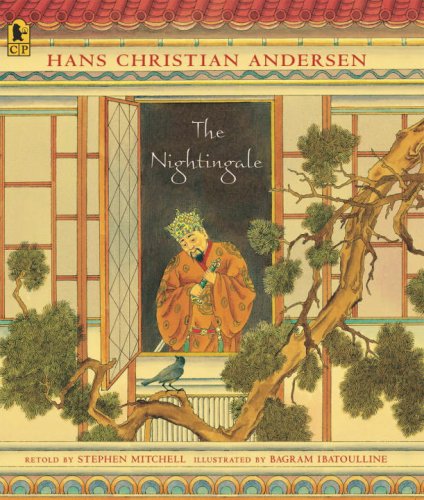
The magic and mystery represented by these faraway lands have often inspired fairy tale authors. A number of Hans Christian Andersen stories are set in exotic locations, most notably The Nightingale, which takes place in ancient China. During the 18th Century, translations of Arabian Nights became popular in Europe, and in 1805 (The year of Andersen’s birth) the Danish poet and playwright Adam Oehlenschlager created a stage version of Aladdin. This was highly popular in Denmark and Oehlenschlager’s romanticism inspired a lot of Andersen’s finest work. Andersen’s fascination with Asia often bled into his tales in more subtle ways. Though his version of The Little Mermaid is regarded as one of the definitive Danish fairy tales, it is actually set in a kingdom with palm trees and orange trees on the beaches, buildings made from white and yellow materials and characters wearing silk and gold. These descriptions invoke images of the Mediterranean, in particular Asian areas such as Turkey, rather than the less colourful environment of Scandinavia. Incorporating the bright colours and distinctive architecture of the Middle East and Far East into his works allowed Andersen to show off his ability at creating beautiful and evocative descriptions and gave his work the magical atmosphere which has allowed it to remain so iconic today.

Many fairy tale works find inspiration closer to home. In Shrek 2, the fairy tale kingdom of Far Far Away is heavily based on modern-day Los Angeles, complete with a version of the Hollywood sign, red carpet events, shops such as Abercrombie and Witch, and even TV shows. The casually anachronistic nature of Far Far Away generates comedy which keeps with the modern and irreverent tone of the Shrek series. However, the decision to model this a fantasy environment on such a prominent real-life location also serves a more serious purpose. LA is famous for being one of the most glamourous cities in the world, due to its association with the stars of Hollywood. By using this location as their inspiration, the makers of Shrek 2 manage to draw parallels between the aspirational fantasies represented by life in LA and the fantasies which define fairy tales, suggesting that the rich and famous of today are the modern equivalent of the kings, princesses and other major fairy tale characters. This gives them the opportunity to create a clearly-defined and colourful world for our characters to inhabit, whilst also satirising the quirks of life which define not just LA, but in the whole of America. The combination of the magical and mundane allowed Shrek 2 to appeal to both children and adults, generating plenty of comedy about modern life without losing the creativity and imagination which make fairy tales so timeless.

The Problems with Creating Distant Kingdoms


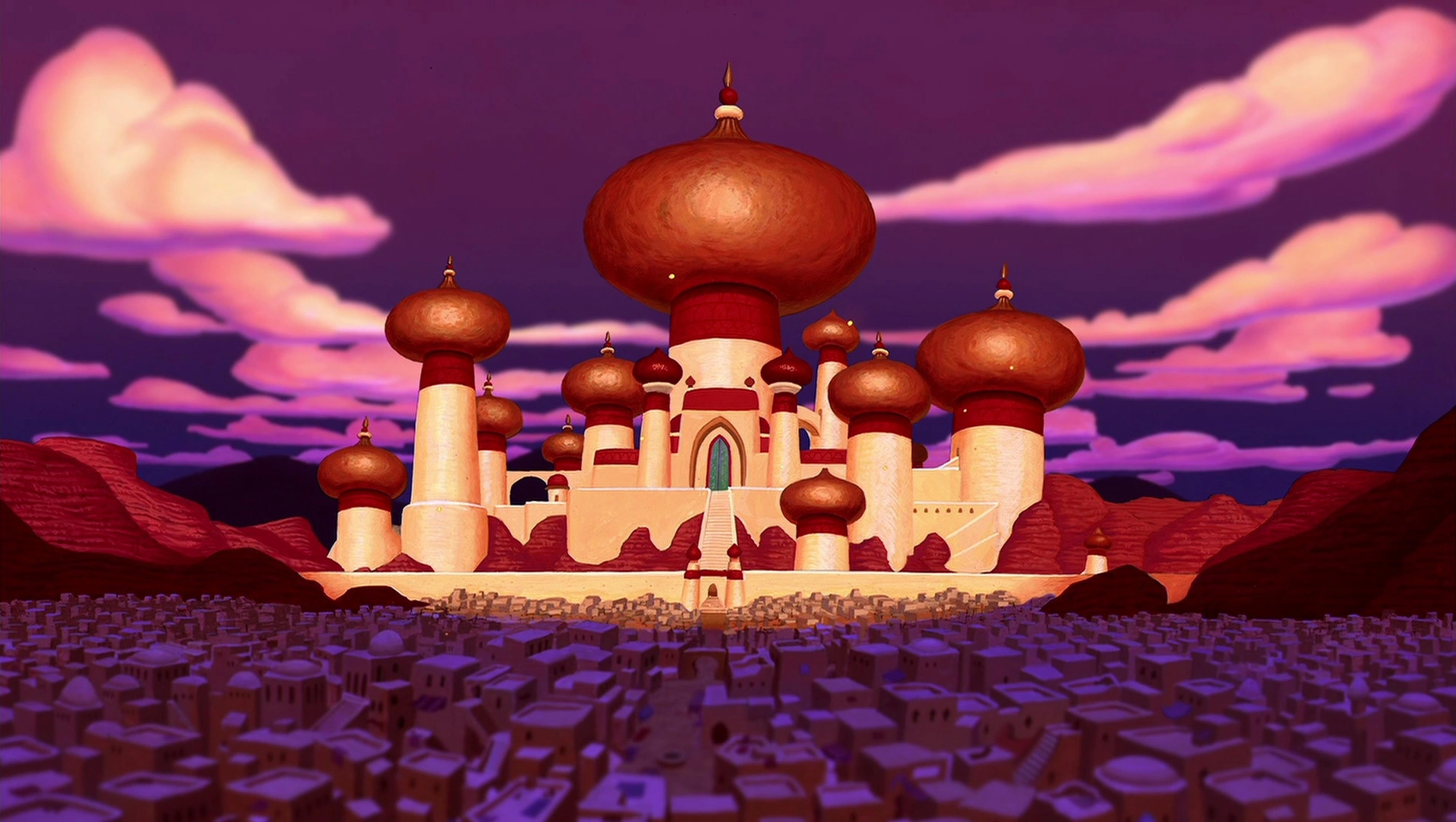
Sometimes, there are instances where decision to set a story in a fictitious kingdom can lead to controversy. This can often happen when creating locations based on regions which are often underrepresented or depicted in an overly stereotypical fashion by Western filmmakers. One film which been particularly criticised for the way in which it creates a fictitious kingdom is Disney’s 1992 hit Aladdin. The kingdom of Agrabah, where Aladdin and the other characters live, is based in the Middle East, but there are also a number of elements from Indian culture, with the Sultan’s palace being modelled on the Taj Mahal. This casual blending of a diverse range of complex cultures into a single entity is made even more problematic by the shallow portrayal of Agrabah’s citizens. With the exception of Aladdin, Jasmine and possibly the Sultan (who look and act more like Westerners than the rest of the cast), the human characters in Aladdin are almost all grotesque caricatures. The Westernised view of Eastern cultures as a single, stereotyped, backwards ‘other’ is known as ‘Orientalism’, and this has the toxic effect of increasing prejudice against these areas. Combining elements from Eastern cultures indiscriminately without respecting their differences and complexities reinforces the Orientalist worldview. It can also generate the deeply offensive implication that the most distinctive thing about these areas is the fact that the inhabitants are not white. In the case of Aladdin, the mishandled and lazy combination of Arabian and Indian cultures ensure that neither is represented properly, hence the controversy generated by the decision to cast the Anglo-Indian actress Naomi Scott as Princess Jasmine in the forthcoming live-action remake of the movie.

Ron Clements and John Musker, the co-directors of Aladdin, also co-directed Disney’s more recent hit Moana. It’s depiction of Polynesian characters and customs is far more sensitive, and more scrupulously researched, than Aladdin’s depiction of Arabs, but there are still issues with it. One of these is the way in which Moana’s island, Motonui, features elements from various Polynesian cultures, including Samoa, New Zealand, Fiji and Hawaii. As a result of this, a small but vocal band of critics have accused it of perpetuating Orientalist tropes by reducing many complex cultures into a single fantasy world. However, in the case of Moana, the decision to amalgamate a diverse range of customs and cultures is more justified for two reasons. First of all, the film is inspired by the story of the Long Pause – the 2000 year gap between the arrival of settlers in Western Polynesian Islands like Fiji and Samoa and the colonization of islands in Central and Eastern Polynesia. During the second wave of exploration, Polynesian tribes discovered, and eventually came to inhabit, islands such as Hawaii and New Zealand. Hawaii and New Zealand are the two areas in the region which have the largest population, and most of the key figures involved in making the movie (including almost all of the cast, as well as co-writers Taika Waititi and Aaron and Jordan Kandell) come from Hawaii and New Zealand. For these people, the wayfinders who ended the Long Pause are a common set of ancestors, so it makes sense for Moana and the people of Motonui, who represent a fictionalised version of these wayfinders, to originate some of the traditions which would later become synonymous with their descendants. Secondly, Moana is based on a set of myths which vary between the Polynesian islands. Just as the writers had to merge several different stories about Maui into a single narrative, they had to merge numerous different and sometimes contradictory customs and beliefs, trying to represent all the regions of Polynesia instead of one specific area. Overall, the Polynesian culture which is created for the film is much more respectful than that of Aladdin, but there are still plenty of errors and missteps, and the very idea of creating a fantasy kingdom based on an area which is often overlooked and misrepresented in the real world can be problematic for some.  The pressures faced when making both Aladdin and Moana illustrate the fact that creating a fantasy world for fairy tales can be a risky process which needs to be handled carefully in order to avoid problematic implications.

Exploring the Kingdom


In the world of fairy tales, life as a ruler is often depicted in an overly idealised fashion. Male heroes are rewarded for their bravery by winning the hand of a beautiful princess in marriage, and the fantasy of being a princess remains popular amongst girls today. The portrayal of medieval kingdoms as worlds where characters enjoy power and prestige, as well as pretty castles and elegant clothes, can clash with our knowledge that the pre-enlightenment period in which most fairy tales are set was one defined by prejudice, plague and superstition. This contrast between the dream and the far less glamorous reality has inspired works such as Amy Schumer’s Princess Amy sketch, Rachel Bloom’s Historically Accurate Disney Princess Song, and David Henry Wilson’s 1989 novel The Coachman Rat, which aim to show that the optimistic fantasies of fairy tales cannot survive in the cruel historical world in which they are set. These works have a number of differences (Schumer and Bloom use their signature styles of edgy comedy to make their points, whilst Wilson’s novel is crushingly bleak) but they share a focus on deconstructing the belief that becoming a member of the royal family in a fairy tale world is a dream come true. In recent years, people have become increasingly aware of the violence and tension underpinning daily life, and this has fuelled the demand for darker and edgier stories. The comforting picture of becoming a popular and successful monarch leading a happy medieval kingdom has become less credible, and this has encouraged some particularly brutal fictional subversions of it.

However, showing more of the real world surrounding the fairy tale protagonists does not necessarily mean focusing on the most negative aspects of the human experience. Some of Disney’s most successful properties, such as Aladdin, The Little Mermaid and Tangled, have been spun off into animated TV series, and the increased amount of time spent with the protagonists in this new medium means we need to explore their world in more detail. In films, the kingdoms of our protagonists are depicted in a superficial fashion, as they tend to be a mere backdrop for events, but TV series need to give us a greater understanding of the environment which our protagonists inhabit. The rise of fanfiction has also fuelled increased interest in exploring the inner workings of fairy tale worlds. Frozen has lended itself particularly well to fanfics about royal affairs. Elsa is the first Disney protagonist to be shown becoming a queen, but her responsibilities are barely explored in the film itself. In a family-friendly fantasy musical such as Frozen, examinations of the political intricacies of Arendelle would be an unnecessary and tedious distraction, but in the world of fanfic, authors can discuss the pressures of running a kingdom as much as they wish. Going beyond the basic depiction of a fairy tale kingdom is hard to do in films, but longer and more complex forms of entertainment recognise that building a more developed and realistic world allows increased opportunities for our protagonists to go on adventures.

Conclusion

In the fairy tale genre, memorable characters and an engaging story are generally more important than the setting, which tends to be a mere backdrop. However, a memorable setting can enhance a fairy tale by giving it a distinctive atmosphere, or providing a variety of interesting places where the protagonists and antagonists can interact. The amount of detail which should go into depicting a location depends on the amount of the length of the story and its focus. In a three-page, fast-paced Brothers Grimm story, the settings do not need to be described in any great detail, but in a film like Moana, we want to get a sense of the daily lives of our characters and the world they live in. In recent years, writers and filmmakers have tried to satisfy the demand for settings which reflect the diversity and complexity of the modern world, sometimes creating controversy in the process. Ultimately, a distinctive location can make a fairy tale film stand out, but we should not forget that it also needs to provide a story and characters which audiences all over the world can enjoy and relate to.